

Discovered the material used inside of the rims: It called Polysil
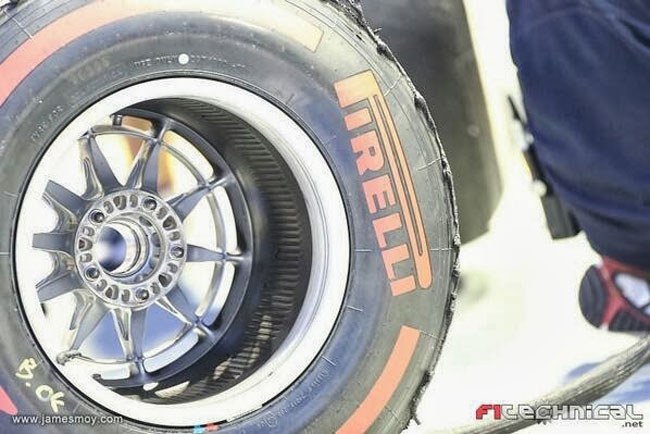 We're talking a lot to a few races of the coating that some top teams are using inside of the rims. A f1analisitecnica received a tip that finally shows us what it is. The material used is a kind of liquid glass with black opacifying pigment that is used to improve the thermal conductivity. The only world producer of this innovative product is the Nanopront and the product is called Polysil. It is a based on atomic silicon coating with revolutionary features that allows the protection of reconditioning the substrate surface structure. With a layer of a few microns high surface hardness (9H) ,the surfaces also have a high resistance all'abrasione.Questa “liquid glass” weighs 95% of a normal painting and has a resistance to temperatures of 1100 ° C. Currently the color coatings of a wheel of Formula 1 weigh from 65 to 85 grams. Thanks to this product the coating weighs only 5 grams and in addition to improving thermal conductivity gave an improvement of 3 points to the CFD as are generated less turbulence.
Mercedes uses Polysil start of the season
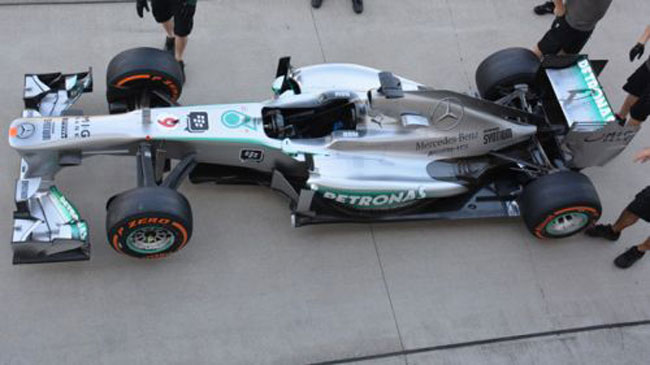 We have already talked about the new material “Polysil” used in the coating of wheels, and the fact that for the first time has been used by Mercedes in summer. Mercedes engineers have begun to use the new cover for the rear wheels in the summer, but the front that has been used since the beginning of the season. This coating is designed by Italian company Nanoprom, so far only available exclusively for OZ Racing and its customers.
and Fife, F1Life.ru Omnicorse.it
[Source: f1life.ru] Read MoreA new material faces in F1: Polysil + A.D.N.C
After it was first reported in advance by F1analisitecnica, then picked up by other sites, use of Polysil by OZ Racing to paint their rims (Discovered the material used inside of the rims: It called Polysil), we are ready to take another important exclusive.
Exclusive: the Nanoprom launches Q.R.S for hoops!
After Polysil engineering Sassuolo offers another product to warm up the tires in the warm up
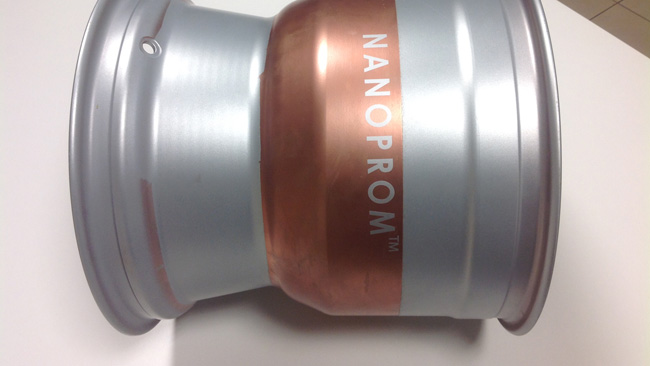
After providing the all'OZ Racing Polysil, the silicon film formed by nanotechnology that allows to retain the heat of the circle with the goal of immediately send heat into the tires in the first lap of each stint (qualifying and race), the NANOPRO, company of Sassuolo, He has already designed an interesting evolution of the theme: the Quantum Radial System. So far the engineers have worked only in the outer face of the rim, but inside the channel, making sure that the heat generated from the brake to dissipate (the wheel comes to temperature peaks which reach the 200 degrees) avoiding that there is disposal quickest possible thanks to the special ducts. With the current Pirelli tires circle has taken a secondary function that Gp Gp after gaining increasing importance.
GLASS LIQUID The application is simple: spraying the “liquid glass” on the rim and create a film of a few microns (touch does not feel any step between the treated and the "naked") that, in addition to ensuring a limited thermal conductivity, associates high abrasion resistance thanks to the surface hardness of this material which also offers a small aerodynamic advantage since it reduces the turbulence generated in the circle for the rotation of the wheel. Without forgetting that the traditional coating of a wheel F.1 requires at least 65 grams of paint, while it only takes Polysil 5 grams!
NANOPROM FORGE OF IDEAS Now the brilliant engineers to Sassuolo Nanoprom directed by Gianluca Falleti studied a new treatment that is aimed at increasing the temperature on the inside of the circle: exclusive image that we propose, indeed, We see the Quantum Radial System that has been sprayed with the power to have a high thermal conductivity. The Opposite of Polysil! The tests carried out have shown a marked improvement of the "warm up" in the circle and consequently of rubber. Also in this case we have been used of nanotechnology (some people think that you are also materials for aerospace and military nature!) but without having as a starting silicon.
THERE 'S ONLY POLYSIL What it is? For now, the curiosity of Q.R.S. can not be satisfied, because the new material is still top secret, but are different teams of Formula 1 who have already shown a great interest in this innovation throughout Italian. What is the temperature rise that can be drawn from this treatment? The experiments are initiated with a gain of five degrees, but tests conducted later are leading to more meaningful values, especially since it would be possible to generate more heat when the designer needs it most.
INTERESTED MANUFACTURERS In short, the feeling is that the Nanoprom not want to be a company that wants to limit to only offer revolutionary products, but also it has the ambition of becoming with its engineering consultant Manufacturers, to develop other applications that can provide performance benefits to the cars that represent the ultimate expression modern technological ...
[Source: omnicorse.it] Read MoreGP. Korea: Ferrari also use the Polysil
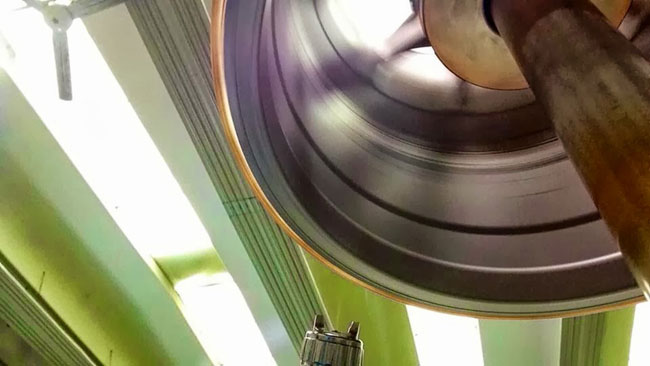
There had already spoken before the Singapore Grand Prix on the use of Polysil the rims to try to bring to the correct temperature in a short time the tires Discovered the material used inside of the rims: It called Polysil. The images seen today in the pits of Korea we can see that Ferrari uses this material that is produced by a company in Sassuolo called Nanoprom. The material used is a kind of liquid glass with black opacifying pigment that is used to improve the thermal conductivity and it is created primarily for the market for the nautical. It is a based on atomic silicon coating with revolutionary features that allows the protection of reconditioning the substrate surface structure. With a layer of a few microns high surface hardness (9H) ,the surfaces also have a high resistance to abrasion. This “liquid glass” weighs 95% of a normal painting and has a resistance to temperatures of 1100 ° C. Currently the color coatings of a wheel of Formula 1 weigh from 65 to 85 grams. Thanks to this product the coating weighs only 5 grams and in addition to improving thermal conductivity gave an improvement of 3 points to the CFD as are generated less turbulence.
[Source: F1AnalisiTecnica.com] Read More


