

cheese race. Andrea Mura tells his Ostar
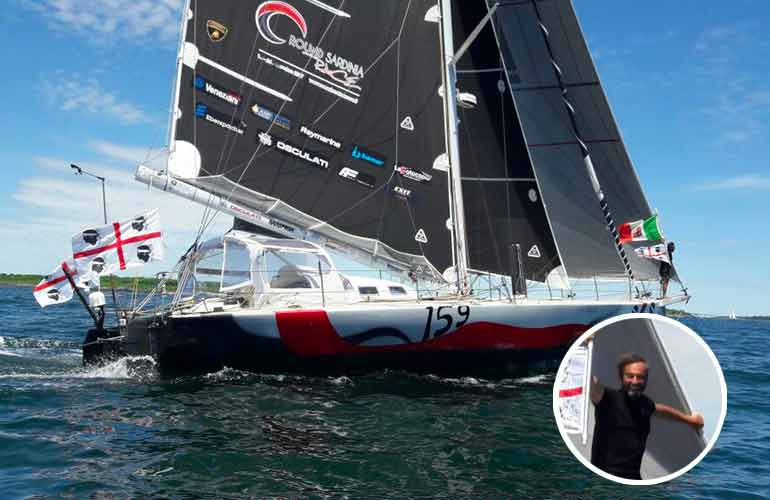
The first interview with Andrea Mura after his victory at the Ostar
Newport (USA) – Andrea Mura, the winner of Ostar 2017, It is still in the United States for his victory celebrations, Solovelanet but he wanted to grant his first interview as winner.
The Ostar Mura, as he himself will tell us, it was a tough race in which he faced three storms of which is very intense with winds exceeding 50 knots. Of the 21 boats start from Plymouth on 29 May, solo 7 They survived the treatment that has given them the Atlantic, the others are due to withdraw or have been abandoned in ocean.
If, when I saw the first intense depression, he immediately decided to go up north to quickly straddle the eye of depression and falling back with favorable winds to the south. The Sardinian navigator is pushed up to the 56 degree north latitude. Unfortunately, Once past the first, two other depressions have come one after the other, and Walls continued to have sail upwind.
In addition to Andrea Mura, in the race there was also a second Italian, Michele Zambelli running on a Class 950, which, however, When it was almost past the third storm, It lost its keel and was forced to activate your EPIRB. Six hours later he was rescued by a helicopter. The day before there had been 3 bailouts of helicopters and ships, four navigators Ostar.
Andrea Mura crossed the line first in Newport on 15 June with a time of 17 days, 4 hours and 6 minutes
SVN - What is the Ostar.
A.M. – It's the hardest race in the world, biggest gym for those who want to test themselves and their boats. It's a race to do against the wind, all upwind in extreme weather conditions, a real gym. This then, the worst of all.
SVN – What happened.
A.M. – In this edition, the sea and wind conditions were prohibitive. We took a storm with winds up to 50 knots.
SVN – Did you have problems.
A.M. – real problems actually a few. It fell to the VHF antenna and I had a leak in the hydraulic piston that lost oil. Anyhow, I had an antenna of respect and oil with you, and I managed to fix everything.
SVN – It went well compared to many others who have left. Fortuna?
A.M. – No, it is not about luck but an extensive work that I do every year on the boat. Nothing is left to chance, and I check each bolt before embarking on voyages of this type. The preparation and care of the medium are very important when you decide to tackle such challenging situations.
SVN – You also win this time: honor on, but you were no opponents, what do you think about it.
A.M. – The Ostar is open to anyone who wants to prove his worth. I was there, the opponent who unfortunately was not able to beat the course record and has, to be honest, in this Ostar there were trimarans on the fastest card Vento di Sardegna.
SVN – Vento di Sardegna, a boat from 1997: It is fine.
A.M. – To stop Vento di Sardegna should throw it against the rocks! The boat is fine, I will continue to update continuously. From the original design I have made several changes, appendices and shaft are newly developed. The Ferns design was very advanced for that time, though, to date, pays the fact of having been built with heavy materials. Now the same boat would weigh much less and would be much more powerful.
SVN – Next appointment.
A.M. – I intend to participate in the Route du Rhum next year and repeat the success of 2010.
SVN – You won and, probably, you win again, Think also to have convinced.
A.M. – I think so, I had lots of feedback from everyone and much cheering, this made me really happy and encourages me to continue, I do not know if I managed to convince some sponsors.
SVN – Sponsors are the ones you have missed to be able to do the Vendée Globe.
A.M. – Unfortunately, yes, and in the last year I have just missed the target to be involved. As we all know, the situation in Italy is not easy, sailing is not sufficiently consider estate and many athletes succeed only with the cover of such entities, for example, aeronautics. For individuals it is very difficult.
SVN – We'll try anyway.
A.M. – Of course I do, I'm stubborn as a good Sardinian! My objective is the Vendée Globe, Give me a Imoca 60 and the next edition will be on the starting line!
17/giu / 2017
Alessandro Balzani
Source [ solovela.net ]
Read MoreThe Vincenti we entrust to Nanoprom: Andrea Mura and Vento di Sardegna.
Testimony of Andrea Walls of Vento di Sardegna, Indications for use of Polysil Nanoprom.
Read MoreMahindra searches paint the secret to winning
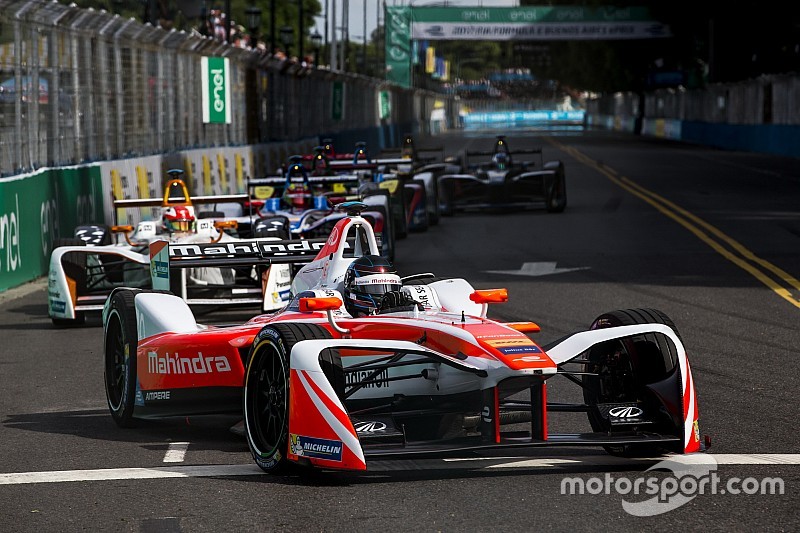
POLYSIL use of materials has benefited the Indian team in Formula E have a better aerodynamic efficiency.
In a series where the chassis is the same, are the details that make the difference. Formula E, this year, release engine has generated an interesting research regarding electrical power units, but on the other hand, the chassis manufactured by Dallara and designed by Spark Racing Technology, You should remain the same.
In the quest to make a difference all possible solutions are studied to bring the two team drivers Mahindra, Nick Heidfeld and Felix Rosenqvist to fight for victory and the title. The team led by Joan Orus championship 2016/17 It is third in the standings of teams and has already accumulated in Hong Kong and Marrakech two podiums and a pole position in the first two races, proving to be potential contenders for Sébastien Buemi and Edams, Defending champions.
Mahindra seems to bet on Italian technology: in addition to the electric motor Magneti Marelli, the Indian team used Nanoprom to repaint the car.
Why? The reason is simple: to catch two birds with one stone: namely save on the weight of the paint on the car and reduce adhesion of dirt and debris rubber body.
The figures show that the adhesion of the rubber would be reduced 80% compared with conventional products, ensuring greater aerodynamic efficiency throughout the race. There are, in fact, adhesives, but they could have affected the aerodynamic drag of a form.
The use of material called POLYSIL Sport, It has been experienced by some teams of Formula 1, and it has allowed Gian Luca and Gabriele Falleti Tredozi save two pounds of weight in the whole body painting Car Mahindra, which by regulation must reach at least 880 kg (eight kilograms less than last year).
Nanotechnology developed by Nanoprom has attracted the attention of Mahindra technicians who are making use of POLYSIL in electric cars. Now, we must expect more surprises in this quest for performance within the series.
[Source: lat.motorsport.com]
Read MoreFormula E: Mahindra whole body is painted with Polysil
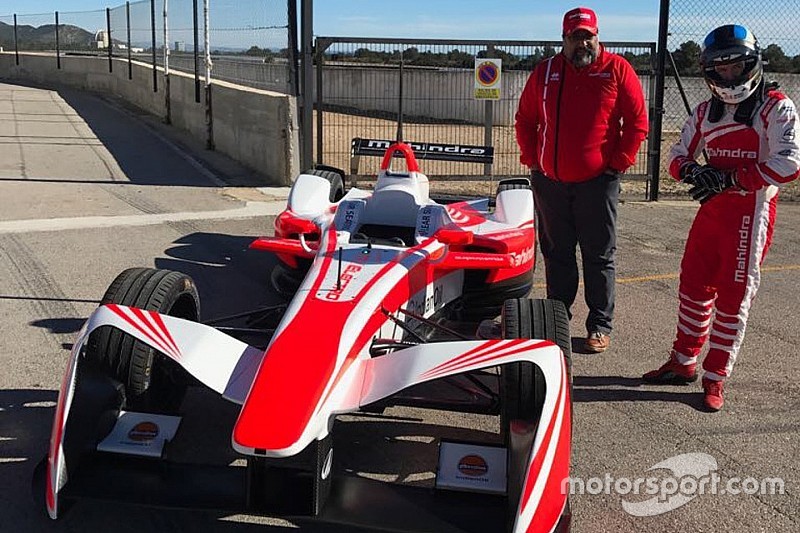
The Orus team has spared 2 pounds with the body color of the cars made by Nanoprom with Polysil Sport Polish. The company wants to Sassuolo ampliar collaboration with Mahindra offering new innovative products.
In a single brand are the details that make the difference. In Formula And this year there is the liberalization of the engines that has sparked an interesting research on electric powertrains, while from the point of view of the frame all the cars made by Dallara on a project of Spark Racing Technology, must remain identical.
IS, then, to try to make a difference is studying all possible solutions to bring the two drivers Nick Heidfeld and Felix Rosenqvist to fight for the victory and the title. The team directed by Joan Orus in the league 2016/17 It is third in the team standings and has already racked up in Hong Kong and Marrakesh two podiums and a pole position in the first two races, revealing a very interesting potential to try to embarrass Sebastien Buemi, reigning champion that has already secured a triplet.
The Mahindra to grow is betting on Italian technology: in addition to having the electric motor of Magneti Marelli, Indian House turned to Nanoprom Sassuolo to repaint the cars.
Why? The reason is simple: to obtain two birds with one stone. That saves the weight of the paint and reduce the adhesion of dirt and rubber residue on the body.
The data say that the adhesion of rubber murble would be reduced by 80% compared to traditional products, ensuring a greater aerodynamic efficiency over the entire race. There are not, indeed, adhesives, but all written have been painted for which also the aerodynamic resistance would have been slightly lower.
L’uso del Polysil Sport Polish, which it has been experienced by some teams to Formula 1 in GP, allowed Gian Luca and Gabriele Falleti Tredozi of even save 2 pounds of weight in one painting the entire body of the Mahindra, a car that to be a regulation must reach at least 880 kg (8 kg less than last year).
Nanotechnology developed by Nanoprom have attracted the attention of technical Mahindra now taking place which may be other uses of Polysil on electric cars. Should we expect more surprises?
[ Source: it.motorsport.com ]
Read Morenanotechnology, from Formula 1 food all'industria
that of NANOPRO, company specializing in nanotechnology Sassuolo (MO), is a technology already quite established in the naval world before and Formula 1 then. Their flagship product, the Polysil®, “is a silicon vehicle added of nanoparticles according to the characteristics that we want to give” He explains the holder, Gian Luca Falleti.
Initially, the product of the company has dug in the world shipbuilding industry, for its performance and qualities of resistance, and then move to the mainland: “What resists at sea, the earth endures 4 times more”, He resumes the holder, and so came the application to the world of cars. In water the Polysil®, among its other properties, It reduces friction, the same on the mainland: on Formula cars 1 It is used on the one hand for the painting of the bodywork, making it lighter (It weighs less than conventional paints), on the other hand to prevent the hot asphalt rubber will stick to the bodywork.
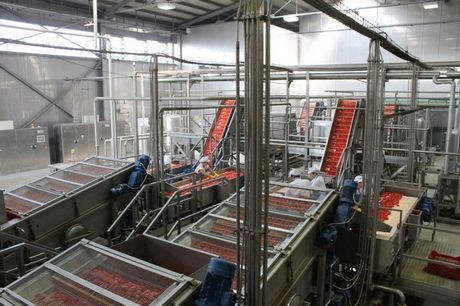
The processing plant of Solana tomato. (photo Solana)
From here it has come in a short passage to the food industry and Solana, a company of Lodi specialized in the transformation of the industrial tomato, He chose this nanoparticle technology to its production facility: the Machinery surfaces were coated Polysil® “avoiding – continua Falleti – oxidation by air and the passage of the tomato, while the adhesion of dirt conveyed by water is more difficult to an extent of 80%. Compared to a traditional coating, fluid runs off more quickly without leaving residues and where there is water there is life, even that of bacteria”. The result is an aseptic unit and easier cleaning.
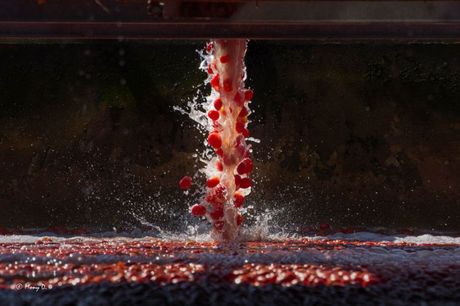
The processing plant of Solana pomdoro. (photo Solana)
“The same technology – He concludes the holder of Nanoprom – we use it even in the freezer (for now only civilian, ed) for the coating of the coils. Since this is a coating of a few microns, he was born in 90% thinner than a traditional coating layer; this allows the system a higher resistance to corrosion and a lower formation of ice in the order of 17%, with significant energy savings so that the process works so they can move from one energy class A to A +, however, without the use of the paint ovens”.
Publication date: 20/10/2016
Author: Andrea Minghelli
Copyright: www.freshplaza.it
Read More


