

Comes the Polysil for the visors of helmets?
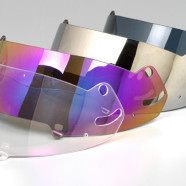
Gian Luca Falleti He has designed another of his analysis of the new single-seater 2014 the Jerez test. The race strategy in Grand Prix 2014, indeed, will force pilots to stay long in the wake of other cars in an attempt to save fuel, seen that the limit of 100 kg granted by new FIA regulations petrol, impose some unusual tactics.
with single outlet mounted on the top and not on the bottom of the cars, i pilots will risk getting dirty much more visors Helmet: that's why NANOPRO Sassuolo has studied a specific product derived from Polysil.
it Polysil, indeed, It is a silicon film, formed by nanotechnology, which ensures a 'high abrasion resistance, he's able to slide off the drops of oil or water, without dirt adhere. Not only, but its features would also have a value in’I reduce the risk of misting of the visor in the event of moisture or rain. It will be interesting to see who will be the first rider to experience this novelty…
[Source: www.omnicorse.it ]
Read MoreInside Tech: Discovering the Polysil, the new interior lining of the rims
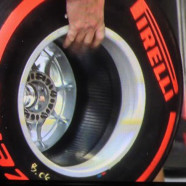
The arrival of Pirelli in Formula One circus has forced the team to deepen studies on the behavior of the tires in different race situations. Compared to what happened with Bridgestone, the compounds have again become a factor and as we saw with the Lotus, sometimes a controlled consumption of its tires can decide positively even whole weekend race. Mercedes during the European GP, with the goal of reducing its thermal consumption, He has introduced a new type of internal coating of the rims, something new that had never been used in the circus of Formula One. This news was soon copied by some teams (Red Bull on all) given that in many machines it can be noted that the inside of the rims appears knurled. After some studies has finally discovered the nature of that ribbing: we speak of Polysil, a silicon-based coating which allows the structure of the surface of the rim protection. Resistant up to 1100 degrees, the Polysil is a material that produces only the NANOPRO and it is a liquid glass coating formed with black pigment opacifier.
For the experts of sailing and the sea is a very material used as a coating in the hulls of boats. It 'used primarily to improve the thermal conductivity, with resistance to abrasion and incredible hardness (in various hardness tests the surfaces coated by Polysil withstand up to 6H). In addition to these significant advantages, this new coating is very light as it weighs 95% of a normal painting (a normal painting of a rim weighs from 65 to 85 grams, while with Polysil they can reach weights of just 5 grams). To further improve the characteristics, some teams this particular wet with water in order to simulate the characteristics of mercury. The team also found a considerable improvement in turmoil since the CFD has found an improvement of three points in the final results. We are facing the nth technological innovation and will be interesting to find out how the team will manage to develop this new type of coating, even outside of the rim itself.
[Source: Formula One Italia]
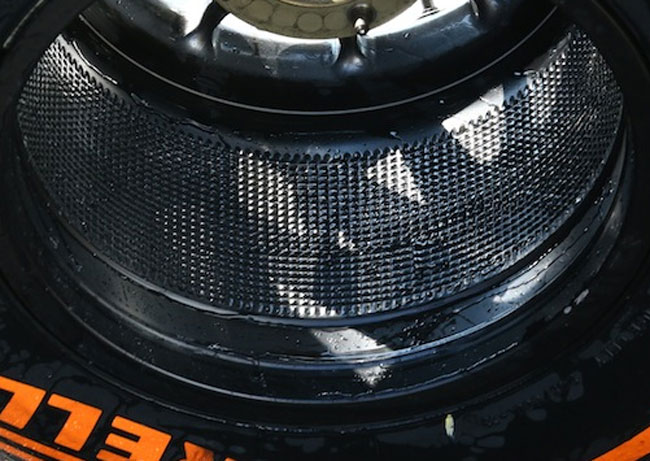
F1 TECHNICAL ANALYSIS: Polysil
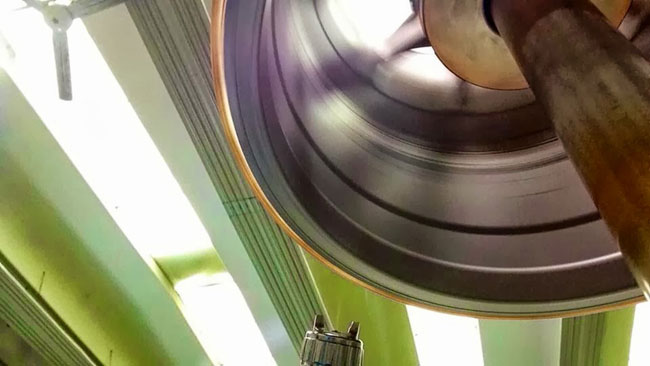
To improve the heat exchange between the rim and tire on the rim is used a kind of liquid glass with black opacifying pigment that is used to improve the thermal conductivity. The only world producer of this innovative product is the Nanoprom is the product is called Polysil. It is a based on atomic silicon coating with revolutionary features that allows the protection of reconditioning the substrate surface structure. With a layer of a few microns high surface hardness (9H) ,the surfaces also have a high resistance to abrasion. This “liquid glass” weighs 95% of a normal painting and has a resistance to temperatures of 1100 ° C. Currently the color coatings of a wheel of Formula 1 weigh from 65 to 85 grams. Thanks to this product the coating weighs only 5 grams and in addition to improving thermal conductivity gave an improvement of 3 points to the CFD as are generated less turbulence In races in which the track was not very hot to increase the heat exchange between the rim and the tire was coated with the Polysil also the inner part of the circle. This new treatment is aimed at increasing the temperature in the inner face of the rim. through an increase in the gloss, increases heat refraction, decreasing the dissipation of the same, but it does not prevent the heat resulted from braking distance inside. This product, this season has been used by Mercedes, Red Bull, Ferrari and McLaren but certainly in the next season also it will be used by many other teams.
[Source: http://www.f1analisitecnica.com/2013/12/modifiche-tecniche-top-e-flop-della.html?spref=tw&m=1]
Read MoreWhat is the Polysil on the rims of the F1 wheel
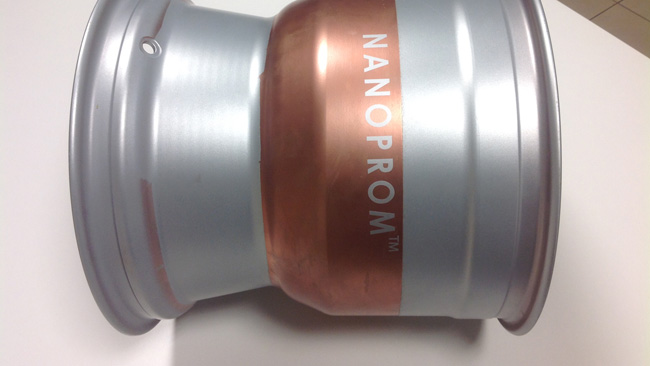
Is called Polysil, It is a product of NANOPRO, company of Sassuolo and it is a film that allows trattene the heat of wheel rims and then return it to the tires by improving the thermal warm-up of the tires.
During the World Cup Formula 1 2013 has talked a lot about this issue but now we are able to show a video, posted on facebook Gian Luca Falleti, owner of the NANOPRO, in which the same company, for voice Giorgio Falleti explains their product.
The Polysil has the ability to attract and transmit heat to himself then in the wheel rims. For every braking action on a F1, thanks to Polysil, generated from the brake disc temperature it is stored and transmitted to the rim which in turn will distribute it inside the tire. So out of a bend the tire itself will be warmer and better trazionerà seater.
The teams that have used the drug were three: Ferrari, Mercedes e Red Bull.
[Source: http://www.circusf1.com/2013/12/a-cosa-serve-il-polysil-sui-cerchi-ruota-delle-f1.php]
Read MoreSport polish, nanotechnology anti marbles
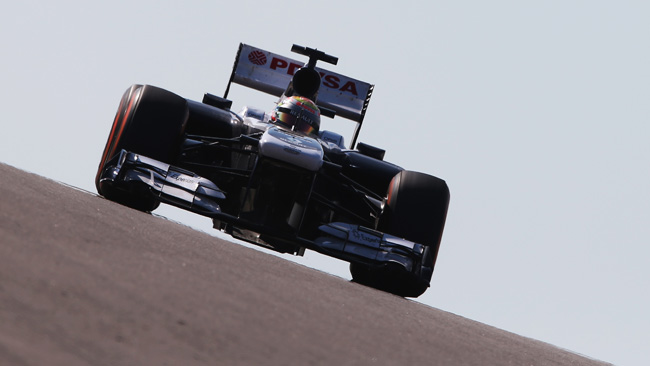
The Nanoprom product is called Sport polish and has been used by two Formula teams 1 to Interlagos. The ingenious club from Sassuolo that came to the fore for Polysil, the film of “liquid glass” which allows to retain the heat of the rims and return it to the tires, improving the warm up of the tire, in its catalog it offers other very interesting nanotechnologies that have piqued the curiosity of two Circus teams.
The bodies of four single-seaters in Brazil have been treated with Sport polish, an anti-adhesive product that has given excellent results to prevent the rubber marbles from occluding the blowing in the front wing flaps, also ensuring effective protection from oil and insects.
The teams were also able to count on two other products: EcoBio1000 and Nanopulitore 602. The former made it easy to clean up residues of hydrocarbons or other impurities on the bodywork. It is a solution that was designed for airplanes (it is used by the helicopter team of Turin and by two companies within Linate airport). The second one, instead, has the ability to remove the protective products released by Sport polish and EcoBio1000 products, as well as removing dirt in depth, leaving the surface ready for painting, without further steps of detergents and degreasers.
Nanoprom technicians assure that compared to normal silicone products, or with naphtha inside them, you can get surprising results with Sport polish since the reduction of dirt adhesion is 80 percent compared to more traditional solutions. Not only, but the other products on the market need to be treated before each session on the track, while the Sport polish only needed one intervention before free practice on Friday and it proved to be sufficient for the whole Brazilian weekend. There remains only a doubt: which teams have benefited from nanotechnology? For now the names remain top secret ...
Franco Nugnes – Image copyright Getty Images
[Source: www.omnicorse.it]
Read More


