

Even the burner Vulcan B5 has a plus
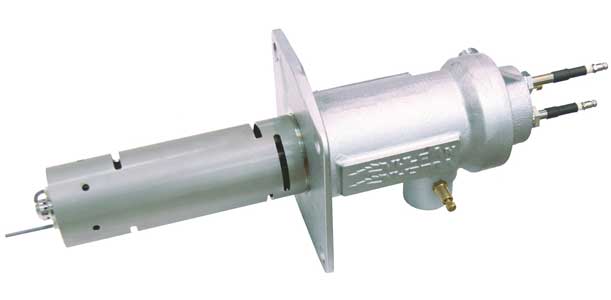
The burner VULCAN B5, designed and marketed by Anchor Spa with highly innovative features for saving energy in the ovens, It has been further refined. The innovation, born from the collaboration with STILL NANOPROM, Sassuolo company supplier of advanced nanotechnology solutions for several teams in Formula One, It consists of a treatment that makes it even more performing the already outstanding performance of the reduction of the consumption VULCAN B5 AGAIN. Such treatment based on nanotechnology reduces to the maximum the surface roughness of the ferrous material, exponentially increasing the smoothness of the air / gas flows; decreases, also, the formation and deposition of any carbon residues. The end result is a mixing of air and gas and an optimal lengthening of the flame thus allowing greater penetration inside the oven. The evolution of the VULCAN B5 burner is one of the innovations being presented by Ancora Group at Tecnargilla 2014, held in Rimini from 22 al 26 September. The novelty has been made possible thanks to an exclusive partnership with Nanoprom, among the first in Italy to carry out research and development of nanopolymers. Ancora Group at Tecnargilla will be in Hall D1, stand 071
[Source: sassuolo2000.it]
Read MoreThe new Polysil does not adhere to the rim murble
The Nanoprom adds another function to the third generation of the miraculous film silicon
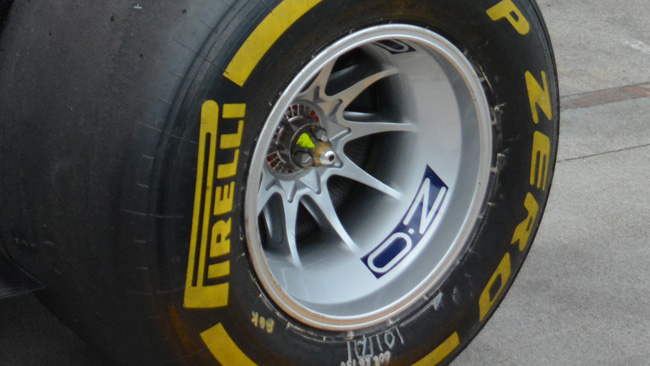
The NANOPRO It launched Third generation of Polysil. The rims of the Formula 1 He is coming a new treatment that adds another important feature to those undertaken so far. It is like Gianluca Falleti, holder Nanoprom, and the consultant Gabriele Tredozi, former technical director at Minardi and HRT, They had adopted the philosophy that has made winning in Circus Adrian Newey, so each piece may have more functions to enhance the overall performance of the machine.
The Polysil has started talking two years ago when the OZ Racing began to be painted in black the inside of the rear wheels with a coating useful to retain the temperature that, instead, had been transferred to the tires thus allowing the rapid heating. The wheel, indeed, assimilating the heat (until 200 degrees) of the carbon discs and radiated tires Pirelli.
The Polysil is a film silicon formata da nanotechnology: spraying what is considered a “liquid glass” on the circle: the effectiveness is ensured by a layer of a few microns for the high surface hardness of this material which also ensures high abrasion resistance. The painting of a traditional wheel F1 cost about 65 grams, while Polysil fell around 5 grams.
Last year the treatment has been extended to the front wheels, while now in third generation of Polysil, the Nanoprom adds another very important property: It cancels the membership of murble, residues of hot rubber that are attached to the wheels. It has been calculated that avoids a significant weight gain during each stint (it comes up to 1 kg for the four wheels!), keeping surfaces clean, avoiding, then, which generate harmful turbulence which can have a negative influence on the trend of flows that now, especially with the perforated front hubs, have a role aerodynamic relevant.
[Source: Omnicorse.it]
Read MoreWhat does it cost to assemble a Formula One? Here are the details ...
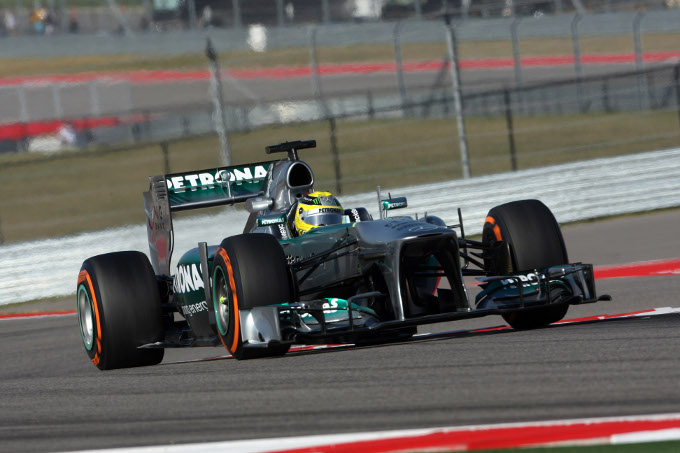
Time budgets within the various teams of circus. After 19 great prizes and lots of trips around the world, the post season is the right time to pull all the sums that concern the expenses incurred during the whole season. As we know well, next year, each team will have to face higher costs quite important, the development of the new V6 up studies in the wind tunnel for aerodynamics of new cars. Each component will have to be revised and modeled according to the new guidelines from the FIA branched. The question arises: but the plan to reduce costs that happened? It 'a question that unfortunately, at the moment, We can not answer. In any case the topic that will be treated today is not the next but, considering that from next season there will be a marked change in costs, it is interesting to find out what kind of charges they faced the team during this 2013. How much it cost to assemble the cars until two days ago they were fighting in the circuit Intergalos?
Read MoreHelmets season 2014 can wear visors base Polisyl
According to British media, FIA is studying the possibility of using plastic alloy that does not stain and has a great technological potential nano.
Last month, British media raised the possibility of Adrian Newey take advantage of a loophole in the regulation of Formula 1 RB10 to coat the plastic with an alloy called Polisyl.
This time, in this Monday (17), the Italian magazine 'Omnicorse' stated that the pilots' helmets visors must contain the same resin for the season 2014.
According to the publication, with the departure of the cars exhaust system is now on the back of fireballs, alloy plastic could help give greater visibility for pilots, seen her not butch nor dirty due to the nano technology coated in the material.
"The International Automobile Federation is investigating the possibility of using the Polisyl based on the manufacture of visors of drivers this year. The material would provide more visibility for pilots, as the new location of the exhaust system can hinder their vision over short distances ", he explained.
The proposal should be discussed by the Strategy Group of Formula 1 during the pre-season test in Bahrain, which starts on 19 of February. The Polisyl is a plastic alloy made of silicon and various carbon chains. The material is resistant to impacts and high temperatures. One of the characteristics of the compound is that it does not accumulate moisture and dirty, which can avoid problems with visibility.
[Source: f1team.leiaja.com]Read More


