Without the World of F1 does not stop searching of companies operating in the sector.The Nanoprom, leading company in the field of nanoparticles, Barcelona had presented an innovative protective film(read here), thePolysil, capable of reducing the weight, protect the surfaces of cars preventing dirt to gather and make better scroll through the air, with better aerodynamics. On this basis and with the desire not to close plants, but further research, Gian Luca Falleti, dynamic entrepreneur cheese, He asked a question to its technical, obtaining a surprising answer: since we are talking a lot of coronavirus and on the surfaces the bacteria resist a long time, We can use our products for the presence abbatterne?
BY A FILM STUDIES F1 FIREWALL BACTERIA
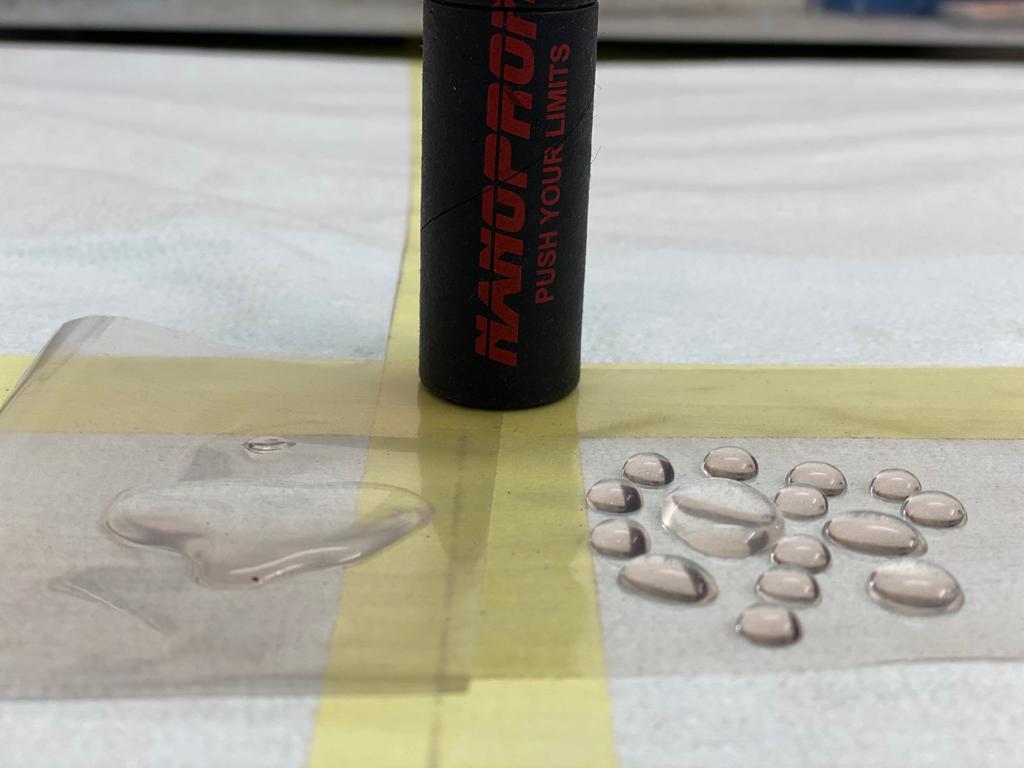
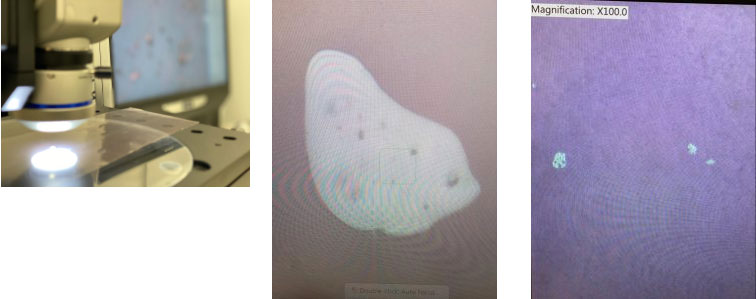
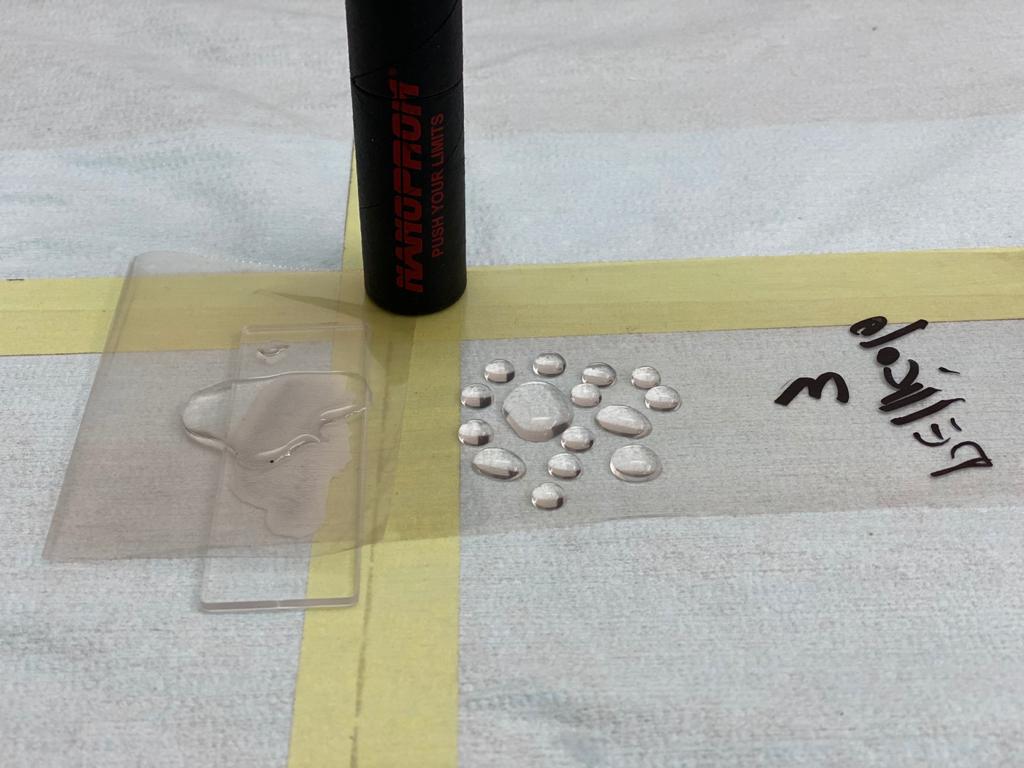
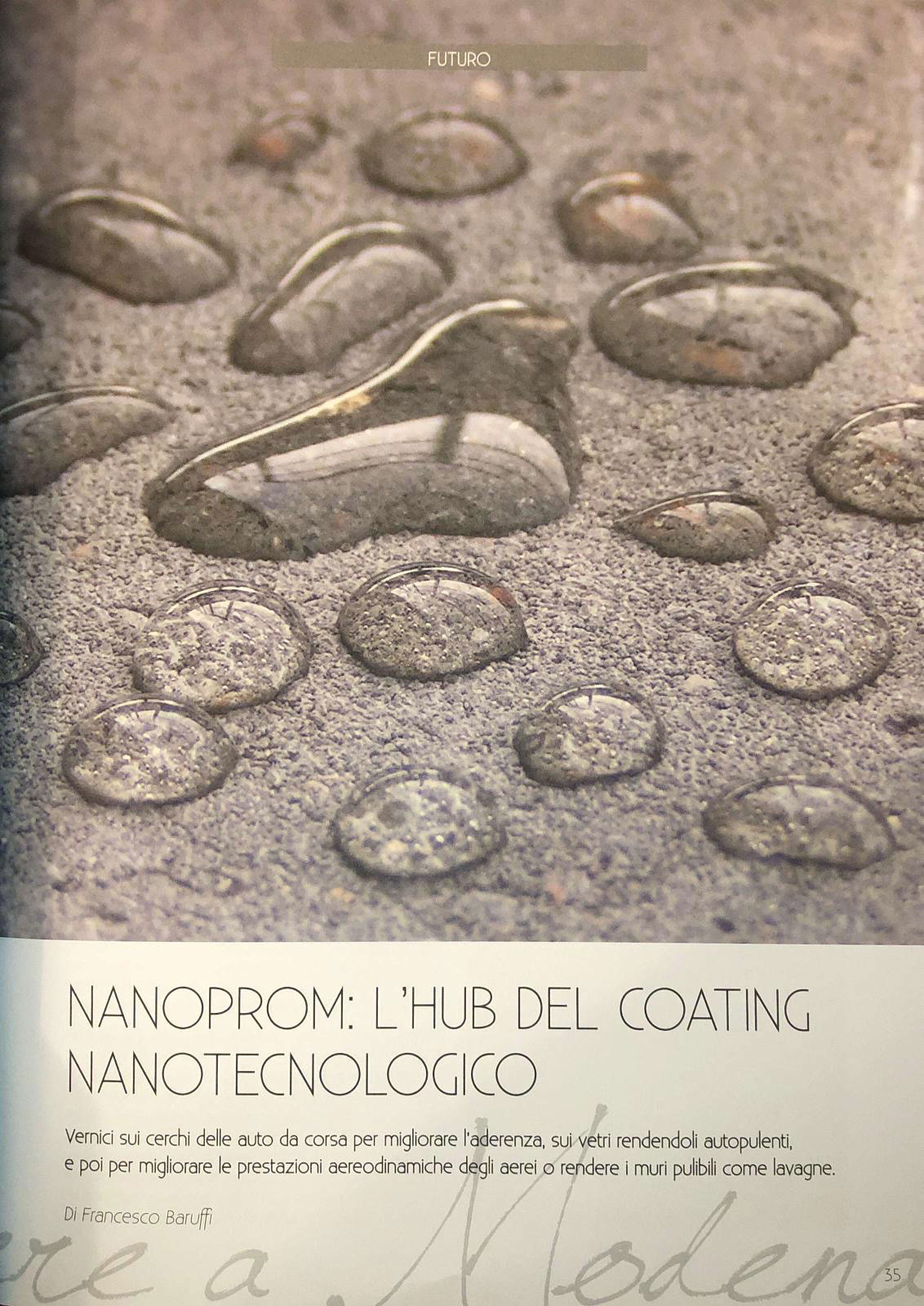
The research and development department has intensified his studies and the result is that with appropriately treated Polysil, the bacterial load wasreduced by 85 percent: “We have not defeated the coronavirus -says Falleti - but we have found a way to decrease the bacterial concentration on the surfaces, hoping that it will be a step forward to slow the spread of the virus that remains in contact with various materials“. In the attached study in the picture is known as the behavior between a normal and a treated surface is different.
The aggregation difference on the untreated surface on the left in comparison with the one treated Polysil right
In the untreatedthe agglomeration is unique, full-bodied and adherent; in that treated you see so many scattered droplets (a way to highlight the different behavior) that can be washed away faster. "We started with the basic principle of Polysil and we changed for other needs. We are waiting for the OK of health facilities because our aim is to provide and cover all the interior of ambulances and we will do it for free. For hospital surfaces, much larger to be treated, we will do it at cost price. We do not want to earn anything, but we are not able to support yourself spending. The others who want to use it on an industrial scale will pay it as a normal product resulting from the research and development of our industry“.
The Nanoprom operates in F1 for years by providing materials to some top teams with lightweight products based on nanoparticles they have gained aerodynamic advantages, weight and heat disposal. The headquarters is in Santanonino Casalgrande, Province of Reggio Emilia, and the company has worked for years even with Leonardo giant, dealing with the varnishing (proving a more dynamic group as compared to the same F.1),aircraft supplied to the group. “Lighten the door paints a huge advantage in the Air -says Falleti - saves weight and that means less fuel for travel, therefore less emissions. With more better aerodynamics, then further advantage and cost savings“.
Posted by admin on Mar 6, 2020 in NEWS, PRESS | Comments Off on F1: there is a new scratch-resistant film for barge board
Of: Franco Nugnes
The Nanoprom, after having launched the Polysil in F1, It brings a new product that will be seen on some cars in Australia. It is a film that has the power to protect complex aerodynamic parts such as barge board being anti-adherent and with a high mechanical strength and low aerodynamic.
It takes a well-trained eye, but in the Barcelona test has made its debut on some cars a new product of Nanoprom, The company of Sassuolo working in F1 for some years.
Having launched years ago Polysil, asilicon film formed by nanotechnology which is sprayed on the circles (it was a “liquid glass”) and guaranteed with a layer of a few microns high surface hardness was ensured thanks to which a thermal transmittance controlled and high abrasion resistance.
The painting of a traditional wheel F1 cost about 65 grams, while Polysil had fallen around 5 grams.
So much so that on subsequent applications F1 teams began to paint more and more consistent body parts. Gian Luca Falleti the Spanish test has brought a new discovery that will be used to create a great deal of attention.
It is a new adhesive film, attached cable that would have the property to protect surfaces from shocks and scratches.
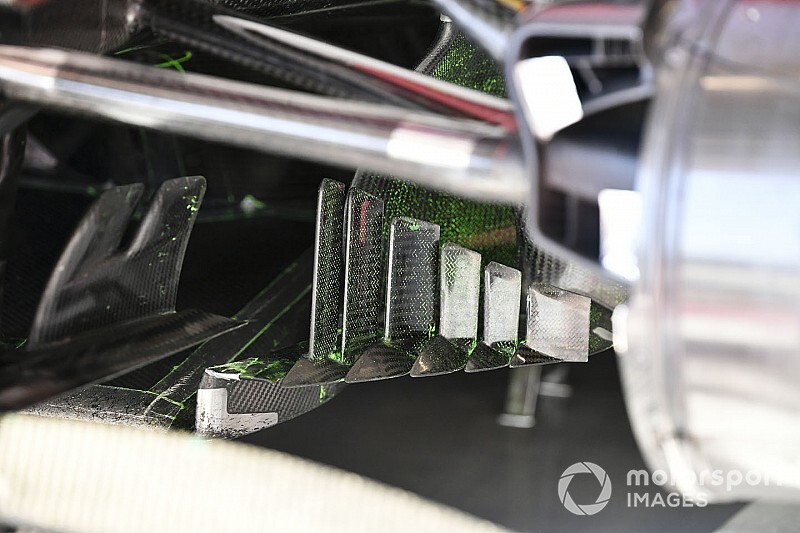
In essence it would be found that the film equipped with the evolution Polysil would be able to protect areas particularly subjected to shocks: It is anti-adherent, and totally equipped with a high mechanical resistance, both the murble tire that small stones that make up the asphalt would not be able to damage turning vanes, barge board and flow diverters that, instead, They are subjected to long reconditioning work.
In addition, the lightness of the film and the low aerodynamic resistance are elements that have attracted the attention of the engineers of the teams. After experiments in Barcelona test, Nanoprom expect to see the film on the cars in Australia ...
Posted by admin on Mar 4, 2020 in NEWS, PRESS | Comments Off on F.1 Polysil Film With the first nanotechnology in the films Made in Italy
PAOLO Ciccarone
In Barcelona it is passed over in silence a very important moment for F1. It was presented, indeed, a product made in Italy in terms of technology and research is the first in the world. It is the Polysil Film, a remover film that is lightweight (It is the result of the search for Nanoprom Chemicals Casalgrande (Reggio Emilia) because it is made of a material that uses the latest research in terms of nanotechnology. In addition to being lightweight, It has several other advantages, such as does not stick to the body rubber residue and other dirt that sticks to cars, modifying the aerodynamic profiles.
The film in Polysil nanotechnologies It is easy to clean, It has a lower rolling resistance, becoming an important element in the aerodynamics of the cars. The work of four years of research and development of the Italian company has been rewarded with a product that resists temperatures, It reduces the oxidation of the metal parts (such as aluminum, for example, widely used in racing cars). The product has been received with great interest in F1 but there arelots of applications in the industrial world. And it all comes from a small company of Reggio Emilia, where they decided to dedicate themselves to excellence of research with intuition typically Italian.
After four years of research, Nanoprom is proud to present its first non-stick film, which teams the unique properties of plastic with those of Polysil.
Benefit for teams
Adhesive-like, attachable and removable film
Non-stick
High mechanical resistance
Protects surfaces against blows and scratches
Reduces work time to recondition surfaces
Light-weight
Low friction
Supporting Evidence
Polysilcan be cold blended with any resins without chemical reaction among the ingredients, such as thermoplastic acrylics, silicones, etc.
When Polysilis heated to at least 450o C the polymer will convert to inorganic ceramic (SiOx). The inorganic ceramics have super high hardness (up to 9H) and extremely high temp resistance (up to 1800 °C) due to their inherent properties.
Polysilis widely used in clear coatings by delivering durability against weathering, UV, chemical, corrosion, staining, graffiti, scratch, and heat.
The typical coating dry film thickness is between 2 to 10 μm.
Aluminum coated with Polysil-based coatings display no corrosion even after 100 days (2400 hours) in the salt spray, (test performed in accordance with ISO 7253).
Steel coated with Polysil-based coatings display no corrosion after 100 days (2400 hours) in the condensed water climate (test test performed in accordance with ISO 6270).
Supporting Evidence
ADHERENCE
(ASTM D3359) 90 -100%
CHEMICAL RESISTANCE
Mek, Acetone, Main organic solvents.
BENDING TEST
Up to 90°(ISO 6860)
ADHESION TEST
(ASTM D 3359-b) (grid) 5B0% of chromed aluminum and composite
TEST ON GLASS SURFACES TREATED WITH POLYSIL®, EXPOSED FOR A TIME OF 2H AT A TEMPERATURE OF 600 °CNo presence of detachment and yellowing.
POLYSIL®
Exposure time: 168 hTemperature: -24 °CNo ice formation on the treated surface.Exposure time 504 hTemperature: -24 °CThe support has a decrease of ice formation of 14% in comparison to the not treated specimen.
TESTING ELECTRICAL INSULATION
Block of the electrical conductivity = 1 kWh This test certifies the block of galvanic currents.
TEST OF ROUGHNESS, STANDARD 4287
The Polysil® is self-leveling: if applied on surfaces with low roughness, it is possible To obtain a RA of 0.021