

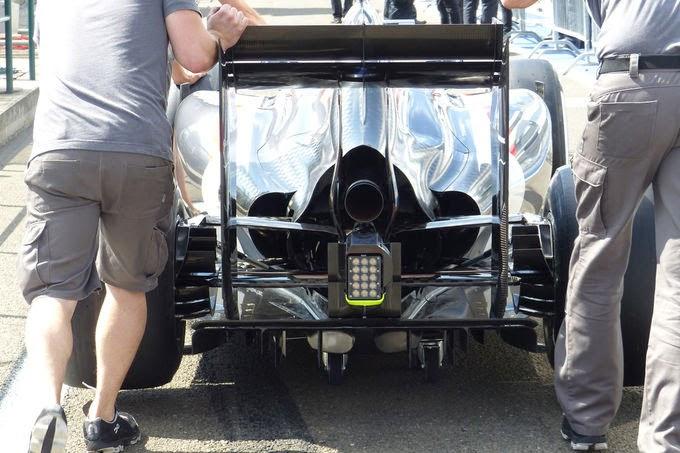
We discover the main technical innovations seen at the Hungaroring
We analyze, all technical changes seen on track, the Hungarian Hungaroring circuit.
Red Bull
New front wing designed to maximize downforce al'avantreno. Compared to Germany it was changed the design of the third supplementary fap (1) with an increase of the rope and it has been partially closed the SBM (2) present between the main profile and the first flap.
At the rear it has added a blow (3) on the upper part of the drift vertical (it has gone from three to four blowholes).
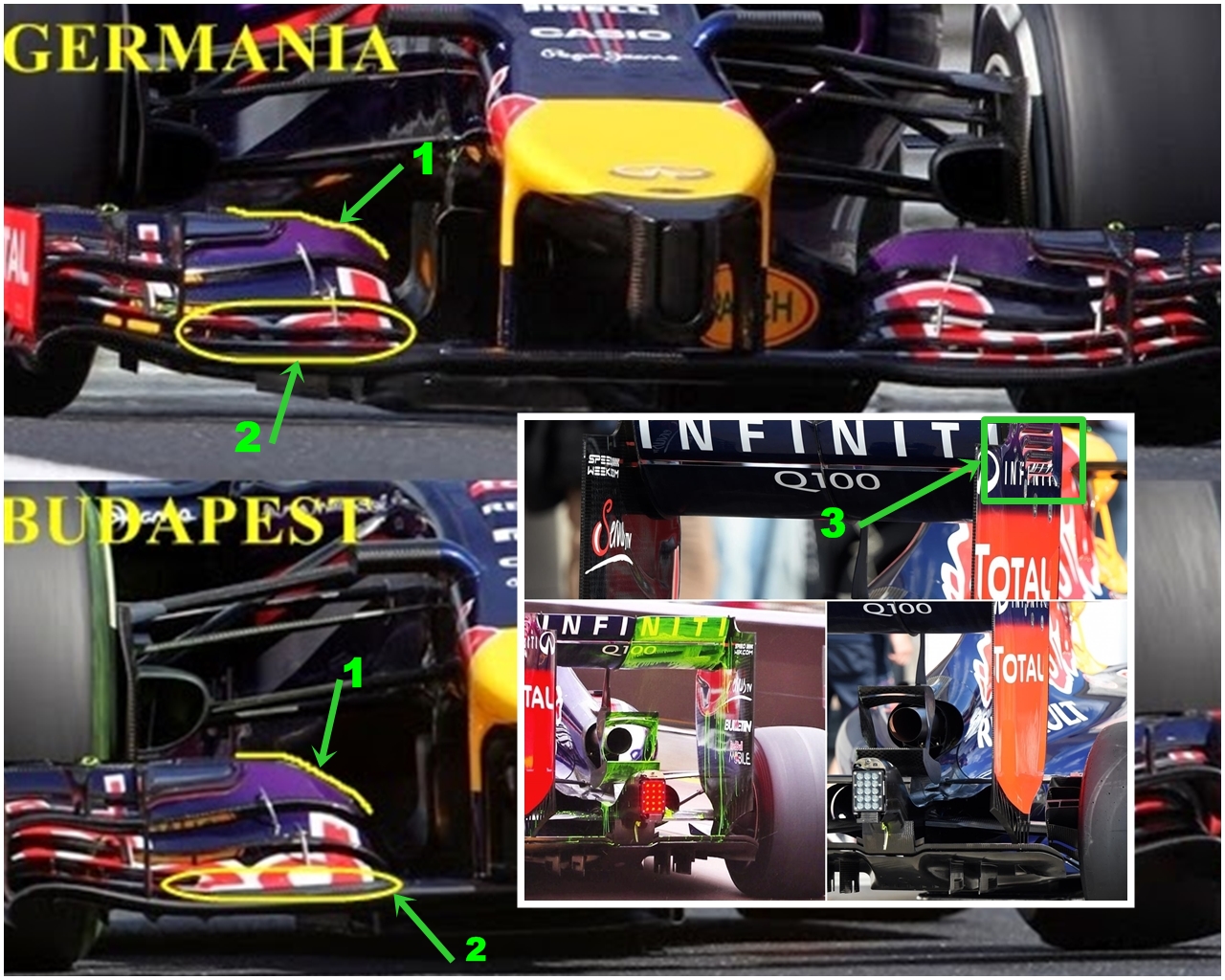
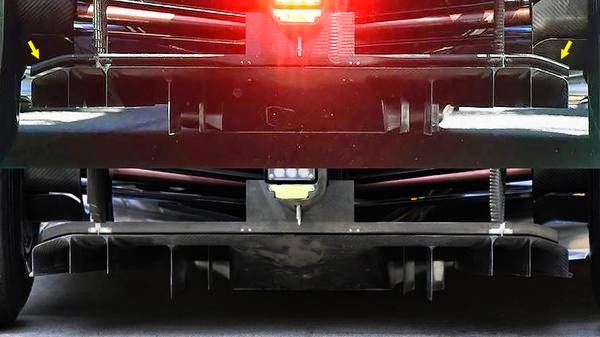
Starting with the Silverstone GP (see photo paint) the engineers worked with almost maniacal care in the diffuser area as it is a very critical area of the car and is essential to generate aerodynamic load. Also this season, despite the abolition of blown exhausts and the prohibition of the FRIC, the Red Bull continues to take advantage of a much more pronounced beaten set-up than the other cars. For this, the engineers headed by Newey, are working on the external area of the diffuser, as one of the problems encountered on cars that use a raised rear trim is that an excessive detachment of the bottom from the ground leads to a loss of ground effect as the section of passage of air between the ground and the bottom. This results in a slower air flow, less depression and there may be the entry of lateral flows from the outside.
Ferrari
At the front, the front wing with double blowing on the main element was used (mainplane) which guarantees a good level of vertical load without compromising the car's resistance to advancement. At the rear, both the “closed” rear bodywork and the one with large rear vents were tested during free practice. The enlarged rear version was chosen for qualifying and the race.
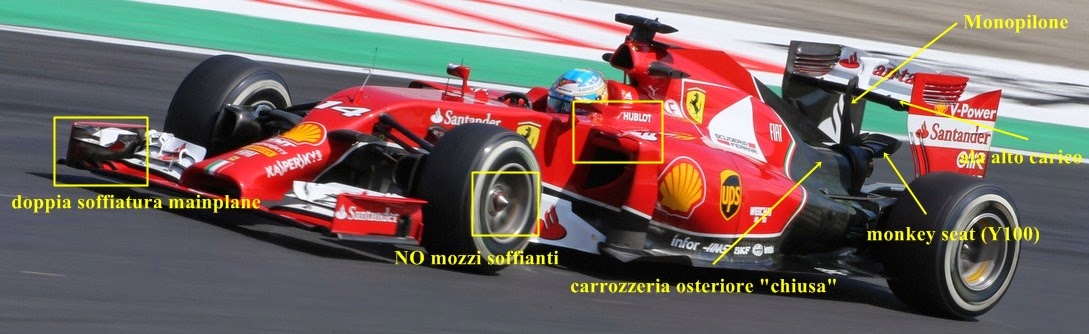
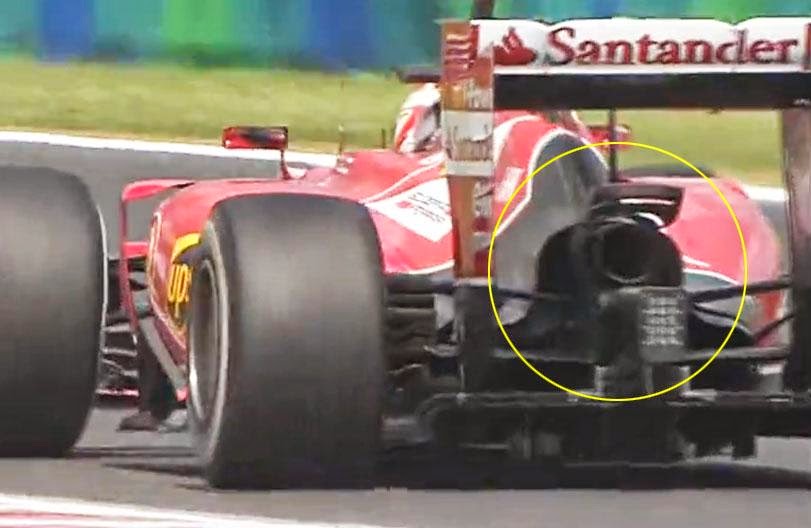
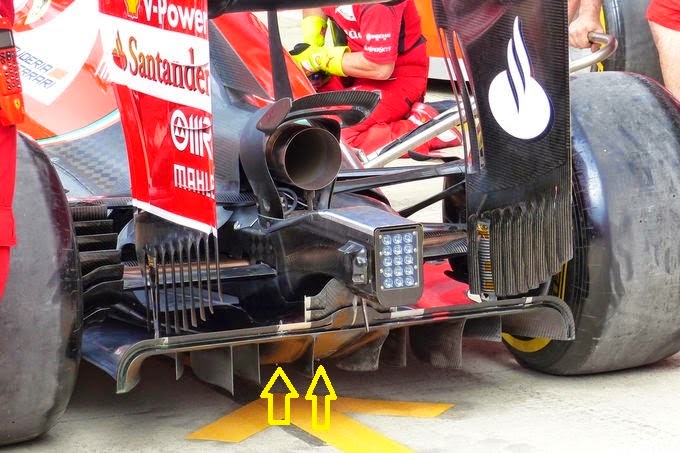
Confirmed the vortex generators in the central part of the diffuser that were introduced on the F14 T during the Silverstone GP. These aerodynamic details are used to delay the detachment of the fluid vein that hits the surface of the extractor, increasing the deporting effect.
Mercedes
On W05 the only note to report is the use, at the front, of asymmetrical brake air intakes.
This solution, thanks to the use of special paint (Polysil) used in the rims serves not to overheat the left front tire more than it should, which on the tortuous Hungaroring track is much more stressed than the right one.
For the race, Hamilton, due to start from the pits due to the engine problem accused during qualifying, he opted for symmetrical brake grips. On the teammate's car, instead, given the rain in the early stages of the race, the engineers have chosen to partialize the front left air intake with tape.
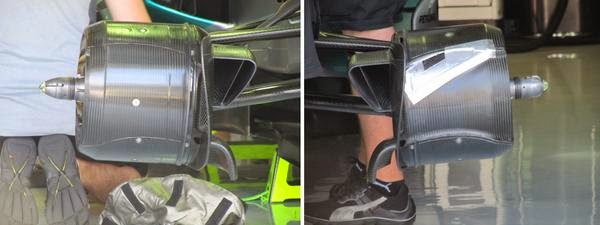
foto Craig Scarborough
Williams
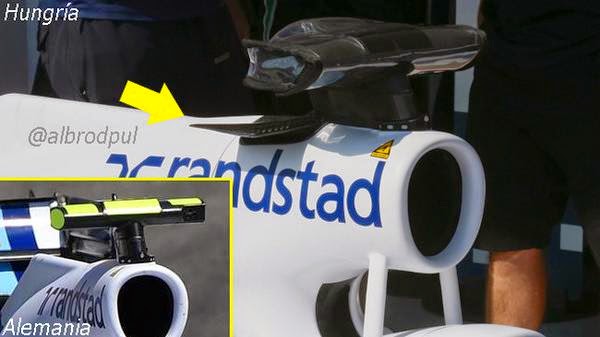
Photo @Albrodpul
On Williams a small fin appeared on the roll bar to improve the flow of air towards the rear wing to increase downforce. This solution is also used, from the start of the season, on Ferrari F14 T.
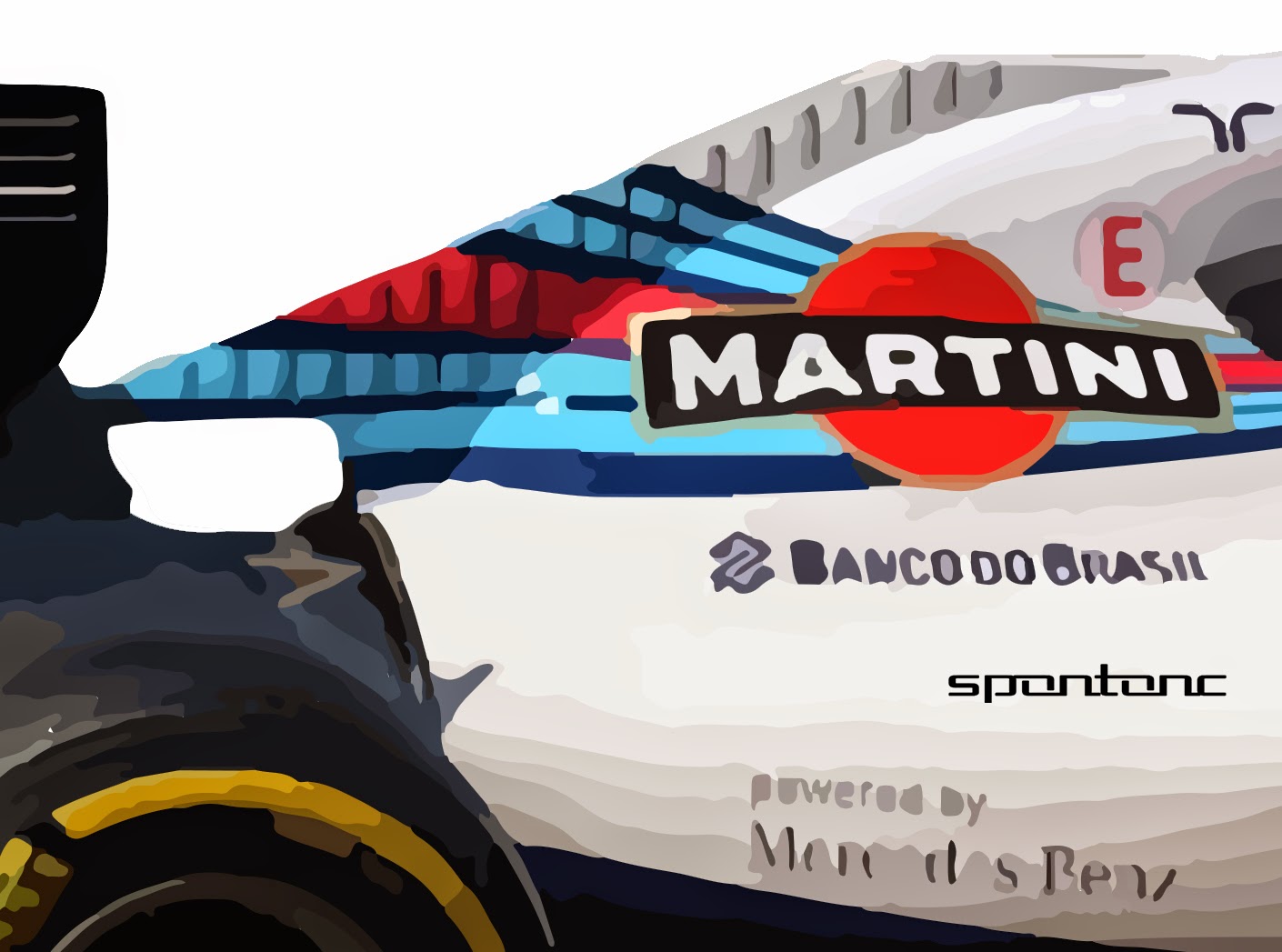
Confirm the gills on the dorsal fin located in the terminal area of the engine hood. In the area where the Williams placed the dorsal fin equipped with gills, large eddies are created that invest the rear wing, reducing the downforce created. These vortices are formed because the hood having to contain the airbox duct has a certain width and then closes quickly in the terminal area of the engine hood, creating vortices. To make the air flow less swirling, Grove's aerodynamics, they placed, right in that area, the dorsal fin with the addition of gills.
In aerodynamics, an interesting principle applies to resistance: the large vortices that detach from the surfaces are very "energetic" so to make them less energetic you try, if it says, to break up the turbulent structures to form more but smaller vortices. Better many small eddies than one big one. And it is for this reason that aerodynamics very often introduce rakes on cars, fins or serrated surfaces. Their function is to break large vortices to reduce the size of the vortex structures.
McLaren
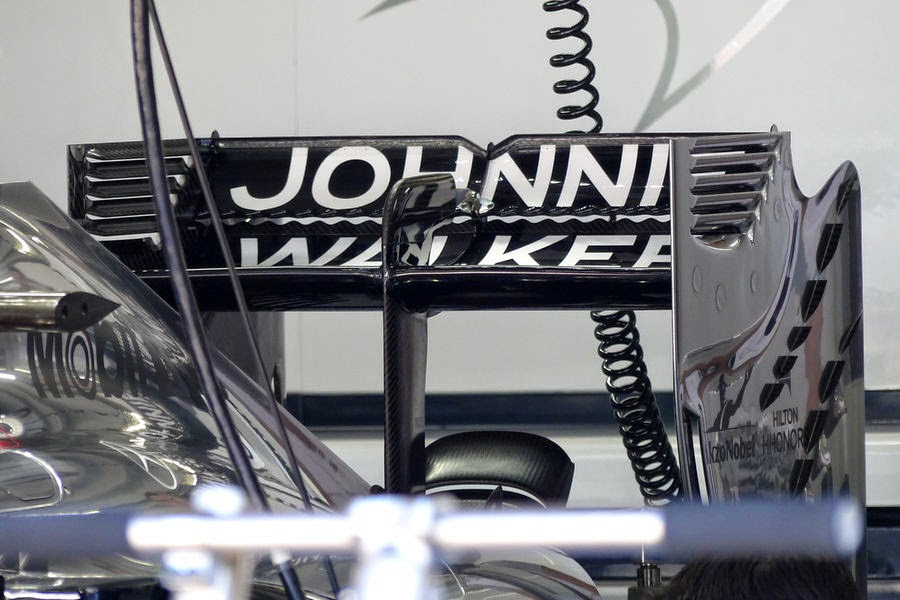
The wing has been confirmed with serrations on the trailing edge of the main profile and on the leading edge of the movable flap in order to delay the detachment of the fluid vein that hits the wing, increasing the deportation effect without increasing the overall drag.
McLaren has positioned, at the end of the engine hood, a double series of three gills to facilitate the extraction of hot air and ensure the Power Unit to work in the right temperature range.
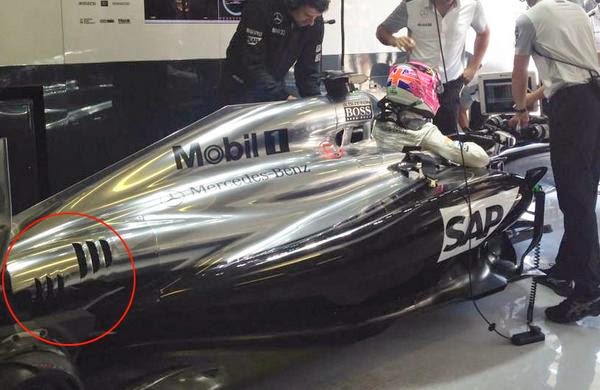
photo @Graftechweb
Clean
In order not to compromise reliability, an engine hood with large rear vents was used on the C33.
Clean
Force India
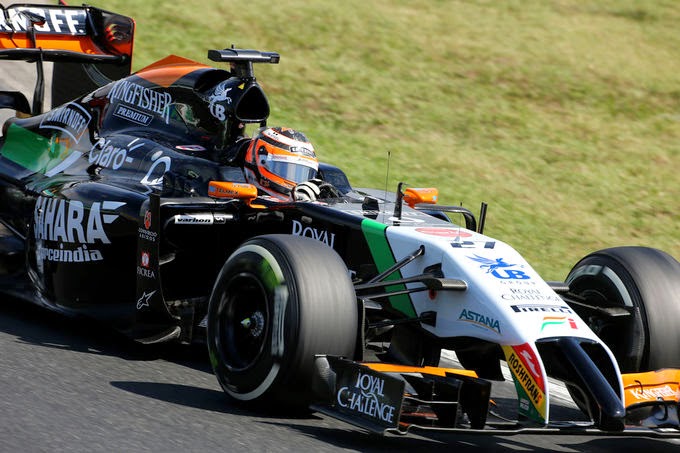
The new bonnet introduced during the Silverstone tests, which penalizes air extraction, was not even tested, improving aerodynamic efficiency. The engineers of the "Indian" team immediately opted for the "standard" solution equipped with additional air intakes placed above the airscope that channel fresh air to cool some internal components of the car.
Lotus
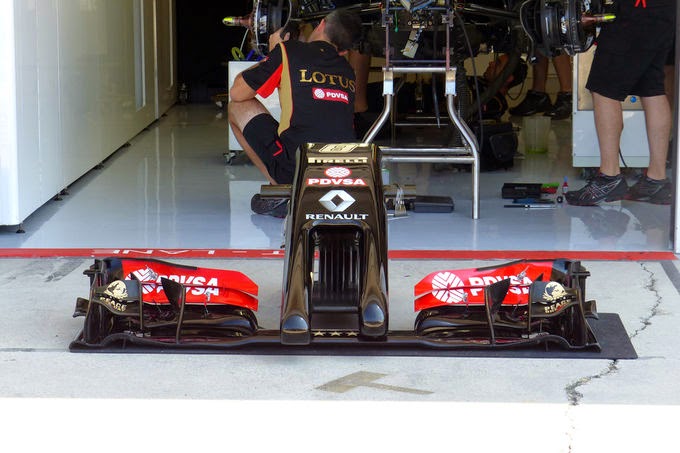
The front wing that was also used in the previous German GP has been revived on the Hungaroring track. This wing, compared to the previous version, it has some changes in the vertical drift area on which an additional triangular and very arched flap has been added.
To increase the load at the rear, the E22 extractor was changed. as you can see from the comparison below, the changes are concentrated on the upper part of the speaker where the gurney flap has been changed to increase air extraction.
Engineer Cristiano Sponton
[Source: f1grandprix.motorionline.com]


