

Italian innovation: From nanotechnology to great success
In this unforgettable 2020 Italy has seen a boom of registrations of new Small Medium Enterprises. A staggering growth of +40%, which can be summarized basically in two points: many have closed store to open another, many others have changed their production. The latter in particular are not the majority, they are young (6.53%), female (8.82%) and foreigners (2%), but they bode well for their contents.
Covid has objectively shaken up an economy that has been stagnant for nearly two decades. On the one hand, many families have ended up on the breadline, on the other, the infinite genius of the Italian people has allowed them to raise their heads and open many SMEs, which will have such a rebound in 2021 that it will generate a positive balance in many sectors overall between 2019 and 2021.
A showcase for this world was undoubtedly the Open Innovative PMI (SME stands for Small and Medium Enterprises, which translates Small and Medium Enterprise), an initiative that annually rewards the three SMEs with the most innovative project. Of these, a special mention goes to Nanoprom Chemicals, a company founded in 2011 by entrepreneur Gian Luca Falleti, from Sassuolo, in Emilia Romagna.
His passion has always been aeronautics. As a young man, he decided to enroll at the aeronautical technical institute of Forlì, but then he was forced to leave his studies after an accident. After a few years spent working in other sectors, he began marketing products for industry and met a chemist. After two years invested in the laboratory on nanotechnology, a field still unexplored in the Italian production, the entrepreneur Falleti decides to study and deepen the Polysil, a derivative of silicon. Today its update is called Polysil Thermal Shield.
This material has the characteristics of glass, while remaining in a liquid state. It follows that the inorganicity of Silicon allows Thermal Shield to be more advantageous compared to classic carbon-based coatings and polishes, for several reasons.
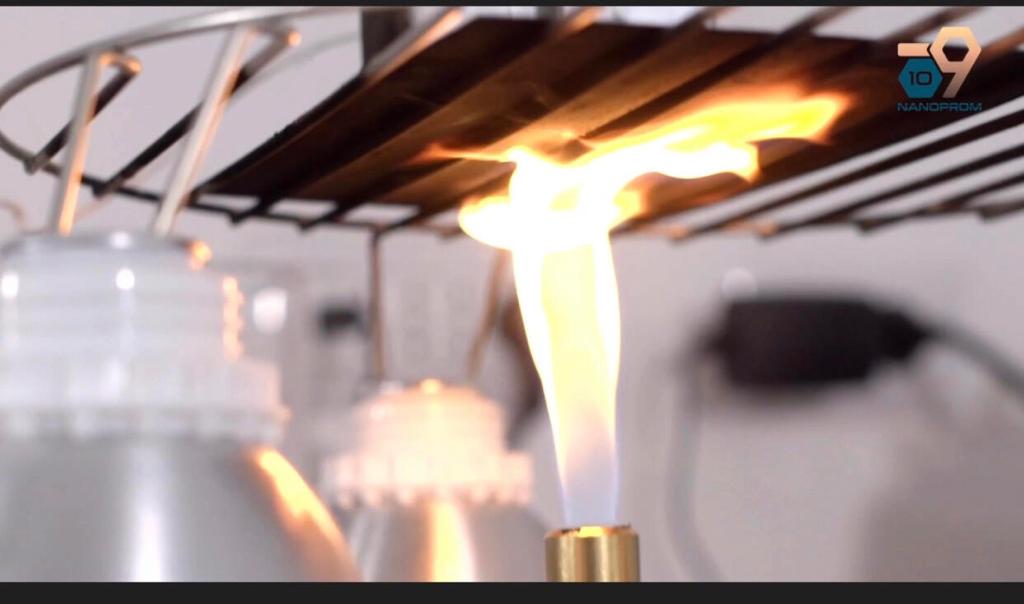
The first one is certainly the non-flammability of the material, which allows its use as coatings for airplanes and marine vehicles, as it is less subject to overheating.
Secondly, the inorganicity of the material acts as an insulator, therefore even a thin layer can be used as a thermal coat both inside and outside.
Finally, the surface tension remains much lower with Thermal Shield than with classic paints, and this makes it more difficult to dirty and to deteriorate the coatings. The surface tension is the ability of a material to attract positive ions. Basically, this silicon-based material is inorganic and insulating, and its low surfactant allows surfaces to remain dirt-free because any material does not get deposited on top of it.
The environmental impact is therefore considerable, both for the use of materials and for their dispersion in water and air. The non-dispersion of heat often takes second place to the pollution of solvents, but often it is precisely the cooling systems of the machines that cause the thermal shock that negatively alters the environmental balance.
It is not by chance that the passion of Falleti allows him today to have among his various customers the Italian Air Force, companies dedicated to public transport and, with a good chance, Formula 1 teams.
The goal is to continue to invest in the research of an increasingly advanced material, which has allowed this fine Emilian company to achieve important goals in just nine years of activity. The hope is to be able to extend this concept to the most diverse sectors. From the safety of a firefighter because this material prevents him from inhaling toxic substances, to electric cars: that are much more likely to develop flames from their batteries. The application of Thermal Shield would substantially lower such a risk.
Changes are increasingly abrupt in more and more sectors, especially during covid. Over the next few years, how we approach the challenges of the near future will tell us what table this great country plans to play at.
There is hope in the automotive sector. Falleti is thinking big for the large-scale production of this innovative paint, recovering a historical site of the Emilian “motor valley”.
“My intention – tells the owner of Nanoprom Chemicals – is to produce Thermal Shield for the whole world while remaining in Emilia Romagna. For this reason, we have already made agreements with Marco Fabio Pulsoni, current owner of the former Bugatti Automobili plant, to transfer here, already within a year, the eventual large-scale production. An opportunity, therefore, not only for my company, but for the entire territory of our region, for which we foresee the creation of several dozen new jobs, given the scope of this great innovation”.
Last year We the Italians interviewed Giampaolo Dallara. Anyone who has ever dealt with the automotive topic knows for a fact that engines run in the blood of Emilia Romagna. So, such an idea that would allow to grow the Italian excellence in innovating the automotive sector (and not just that) can only evoke the enthusiasm and ardor of a child like me who grew up watching and dreaming Ducatis and Ferraris.
[Source: www.wetheitalians.com]
Read More
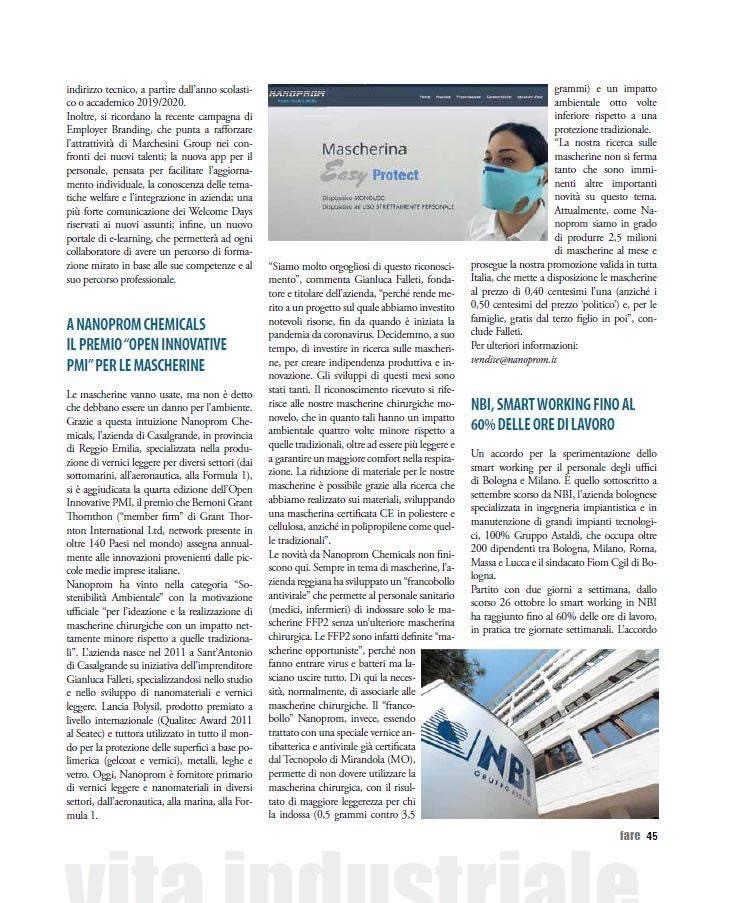
Nanoprom Chemicals brevetta Thermal Shield, the paint that does not burn
From researchNanoprom Chemicals, Casalgrande company (RE) specialized in the production of light paints, an innovative paint is born that promises to revolutionize the world of aeronautics, dell’automotive (especially electric cars), security (firefighters in the first place) and of the same Formula 1.
The name of the invention, already patented, è “Thermal Shield”, literally "heat shield", and its basic characteristics are basically two: it does not burn and does not spread heat.
The founder and owner of Nanoprom Chemicals himself illustrates the principle of this paint in more detail, Gianluca Falleti, which already supplies aeronautical companies with its light paints, aerospace and major Formula teams 1. Now, he sees a great future for what he has already called "an authentic revolution in the world of paints and resins". For its application on carbon and other composite materials, indeed, there is also a "resin" version of this innovative paint.
“The special feature of Thermal Shield – explains Falleti – lies in the nature of its molecular formula, which is completely inorganic, unlike the fireproof materials used today, which contain organic molecules, therefore in itself flammable. The fact that Thermal Shield is silicon based and does not contain carbon atoms, instead, makes the performance of this paint exceptional against fire and heat sources, as it does not develop any flame. And there is more: it acts as a real "heat shield". For example, thanks to the collaboration with the Crossfire laboratory of Gianlugi Creonti in Solarolo, in the province of Ravenna, we have already tested that only 4 millimeters of application on a carbon or steel plate, they reduce the heat from one side to the other from 1000 degrees centigrade a 100 degrees, without, however, the production of fumes. And remember that, in a situation like that of a fire, the danger for a person is often more represented by the smoke than by the open flame”.
“Thermal Shield applications, of which we are currently at the version 2.8, but we are already working on the 2.9 – Falleti continues – they are almost innumerable. The greatest concrete results can be had, for example, in the world of aeronautics. For all aircraft manufacturers, the terror is that of fires that can develop on board. This fire retardant paint, applicable to engines and potentially flammable components, it would substantially reduce the danger of fire development on board. But the entire automotive sector is also potentially affected, especially the most innovative of electric cars. Precisely these cars are much more likely to develop flames from their batteries. The application of Thermal Shield would substantially reduce such a risk. Not at least, we also consider the equipment of a rescuer, for example a firefighter, that with this paint applied to his gloves and his suit would be much more protected in the interventions.Similar considerations can be made for company fire doors. Then, of course, we intend to bring this innovation also in Formula 1, in the suits of the pilots but not only, to increase the safety of those who run further and further 300 km / h”.
And there is more. For the large-scale production of this innovative paint (Thermal Shield is currently produced in small quantities at Nanoprom Chemicals and Crossfire), Falleti is thinking big, recovering a historical site of the Emilian "motor valley".
“My intention – adds the patron of Nanoprom Chemicals – is to produce Thermal Shield for the whole world while remaining in Emilia Romagna. For this, we have already made arrangements with Marco Fabio Pulsoni, current owner of the former Bugatti Automobili factory, to transfer here, already within a year, any large-scale production. An opportunity, then, not just for my company, but for the entire territory of our region, for which we expect the creation of several dozen new jobs, given the scope of this great innovation”.
[Source: https://www.confindustriaemilia.it/] Read MoreF.1 NANOPROM Nasce Thermal Shield, the paint that does not burn
It was patented by the company Nanoprom Chemicals, than designing large-scale production for aeronautics, automotive and Formula 1 has already optioned the former Bugatti plants in Campogalliano (MO)
From Nanoprom Chemicals research, Casalgrande company (RE) specialized in the production of light paints, an innovative paint is born that promises to revolutionize the world of aeronautics, dell’automotive (especially electric cars), security (firefighters in the first place) and of the same Formula 1.
The name of the invention, already patented, is "Thermal Shield”, literally "heat shield", and its basic characteristics are basically two: it does not burn and does not spread heat.
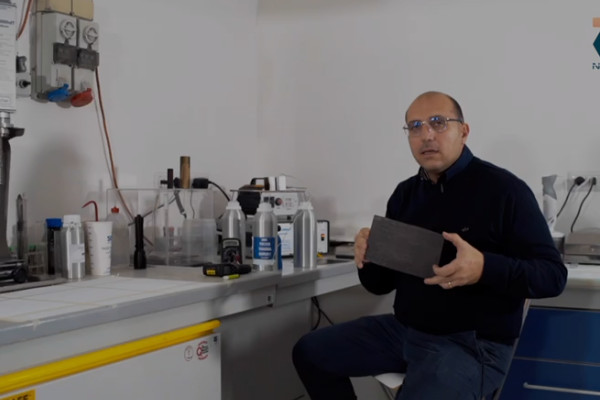
Gianluca Falleti the brilliant animator of Nanoprom
The founder and owner of Nanoprom Chemicals himself illustrates the principle of this paint in more detail, Gianluca Falleti, which already supplies aeronautical companies with its light paints, aerospace and major Formula teams 1. Now, sees a great future for what he has already defined "an authentic revolution in the world of paints and resins ". For its application on carbon and other composite materials, indeed, there is also a "resin" version of this innovative paint.
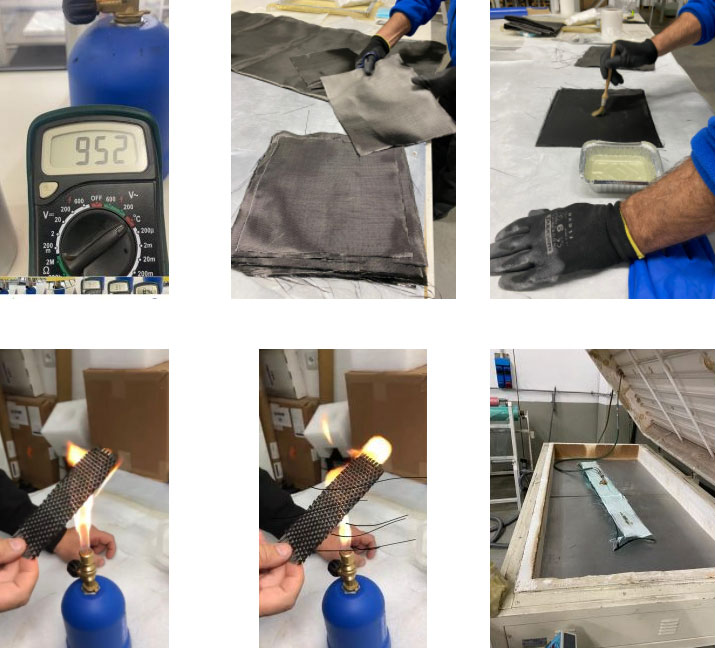
“The special feature of Thermal Shield - explains Falleti - lies in the nature of its molecular formula, which is completely inorganic, unlike the fireproof materials used today, which contain organic molecules, therefore in itself flammable.The fact that Thermal Shield is based on silicon and does not contain carbon atoms, instead, makes the performance of this paint exceptional against fire and heat sources, as it does not develop any flame. And there is more: it acts as a real "heat shield". For example, thanks to the collaboration with the laboratoryCrossfire Srl of Gianlugi Creonti in Solarolo (OUT), we have already tested that only 4 millimeters of application on a carbon or steel plate, they reduce the heat from one side to the other from 1000 degrees centigrade a 100 degrees, without, however, the production of fumes. And remember that, in a situation like that of a fire, the danger for a person is often more represented by the smoke than by the open flame ".
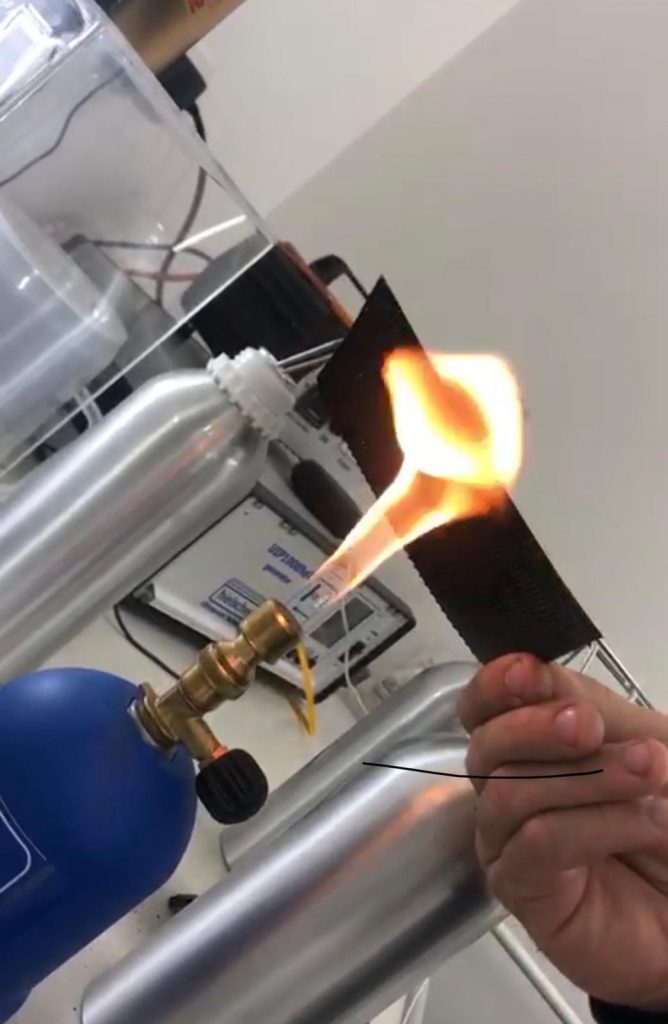
“Thermal Shield applications, of which we are currently at the version 2.8, but we are already working on the 2.9 - continues Falleti - are almost innumerable. The greatest concrete results can be had, for example, in the world of aeronautics. For all aircraft manufacturers, the terror is that of fires that can develop on board. This fire retardant paint, applicable to engines and potentially flammable components, it would substantially reduce the danger of fire development on board. But also the entire automotive sector is potentially interested, especially the most innovative of electric cars.Precisely these cars are much more likely to develop flames from their batteries. The application of Thermal Shield would substantially reduce such a risk. Not at least, we also consider the equipment of a rescuer, for example a firefighter, that with this paint applied to his gloves and his suit would be much more protected in the interventions. Similar considerations can be made for company fire doors. Then, of course, we haveintention to bring this innovation also in Formula 1, in the pilot suits but not only, to increase the safety of those who run further and further 300 km / h.

And there is more. For the large-scale production of this innovative paint (Thermal Shield is currently produced in small quantities atNanoprom Chemicals e Crossfire), Falleti is thinking big, recovering a historical site of the Emilian "motor valley". "My intention - adds the patron of Nanoprom Chemicals - is to produce Thermal Shield for the whole world while remaining in Emilia Romagna. For this, we have already made arrangements with dr. Marcus Pulsoni, current owner of the former Bugatti Automobili factory, to transfer here, already within a year, any large-scale production. An opportunity, then, not just for my company, but for the entire territory of our region, for which we expect the creation of several dozen new jobs, given the scope of this great innovation ".
[ Source: https://www.rmcmotori.com/ ]Read More


