Mercedes Nera, A Choice That Is Not Just Markerting (The Cx has to do)
The aerodynamic coefficient improves with matt black
by Paolo Ciccarone
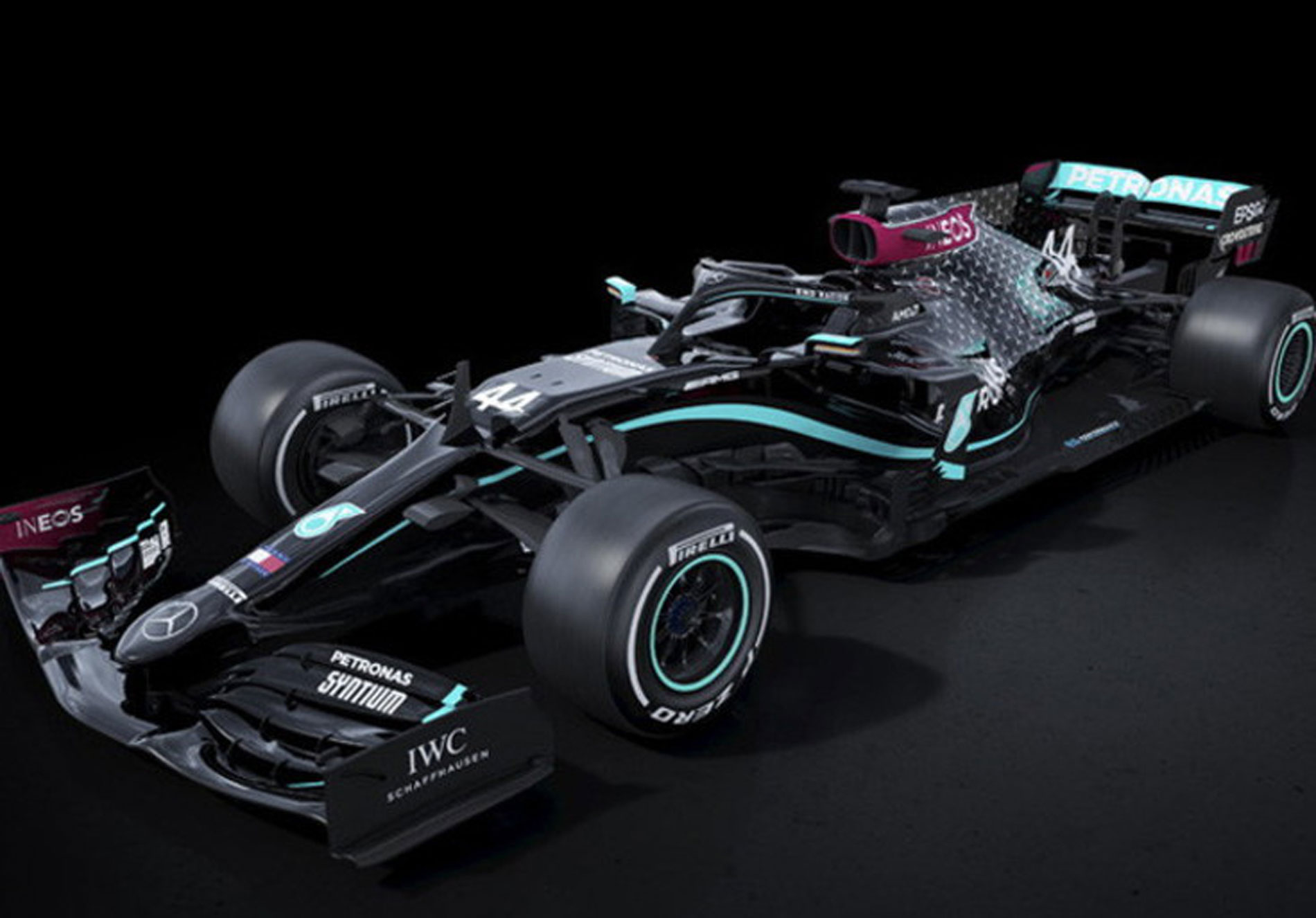
Combine business with pleasure. For Mercedes, profit is the social message against racism and coloring the Hamilton and Bottas car black. A courageous and important choice with a strong symbol, color, that from silver arrows has transformed the black arrows of Styria into this world championship start. As often happens, But, to a choice of marketing and communication, a technical choice follows. Or, decided to color the car in a certain way, what advantage we can get? And here comes the genius of Mercedes and its technicians, because the black used to paint the cars also has a different purpose. It's called aerodynamics and we explain why. For some time we have been talking about the temperature problems of German and black cars, at first sight, would only make things worse. Except that the special treatment creates a higher temperature on the surface layer than, in the moment of action, or air penetration, what looks like a disadvantage is actually an advantage. The air is a fluid and in contact with the surfaces of the car creates micro vortices. These vortices are all the denser the denser the air. Therefore, to decrease fluid threads and decrease micro vortices, it would be necessary to heat the air to make it less dense. And here comes the fun part with the paint treatment. In Italy Nanoprom has continued the development of these micro particles for years by developing the nanotechnology of paints, which besides being light have two functions: heat dispersion and therefore to protect the various accessories on the cars, and an irradiation such as to make the outer layer a phenomenal conductor. Starting from this principle, Mercedes has also embraced the line of special colors, but choosing the polish (which is easier to clean than opaque) , while opaque was introduced on Red Bull which has always used films and opaque transparent, easier to clean and remove, while Ferrari last year chose to paint its car in matt, with problems related to cleanliness on this choice. An opaque color reflects less and absorbs more heat, reduces the presence of impurities collected on the track, but it is a color that better dissipates heat while absorbing more of it and with this increases aerodynamic penetration. We enclose a report by engineer Jean Claude Migeot with the results obtained in the wind tunnel on studies with Nanoprom paints:
Please find attached the Nanoprom test results,
With seven tests on three different set-ups, we
found a reduction in Cx ranging from 0.2 to 0.5%. This
corresponds to an average reduction in Cx amounting to
approximately 0.8%. The measurements are reasonably
repeatable and all constitute improvements, so it can be said that
there is an effect and it is measurable. Among other things, it
is more or less quantifiable as due to a reduction in the friction
coefficient amounting to around 10%, which is similar to results
obtained for flat bases and on pipes with tests which Nanoprom
has had carried out by a university (Trieste, I think) and another institution.
Jean Claude Migeot
Practically, using the type of special paints and the opaque coloring, there is an improvement in the Cx which reaches the 0,8 percent, or almost a point and the reduction of friction leads to a minus 10 percent. That's why after Red Bull and Ferrari, even the Mercedes has converted to the different color and moreover with a black that accumulates heat, but it makes the air more fluid, therefore reducing friction and micro vortices on the bodywork improving aerodynamic penetration. Someone says they have improved on 1 point of Cx, that at those speeds is really a lot. When it is said to combine business with pleasure ...
[ Source: gazzettadiparma.it ] Read MoreAn Antibacterial Surface Film Against Covid-19
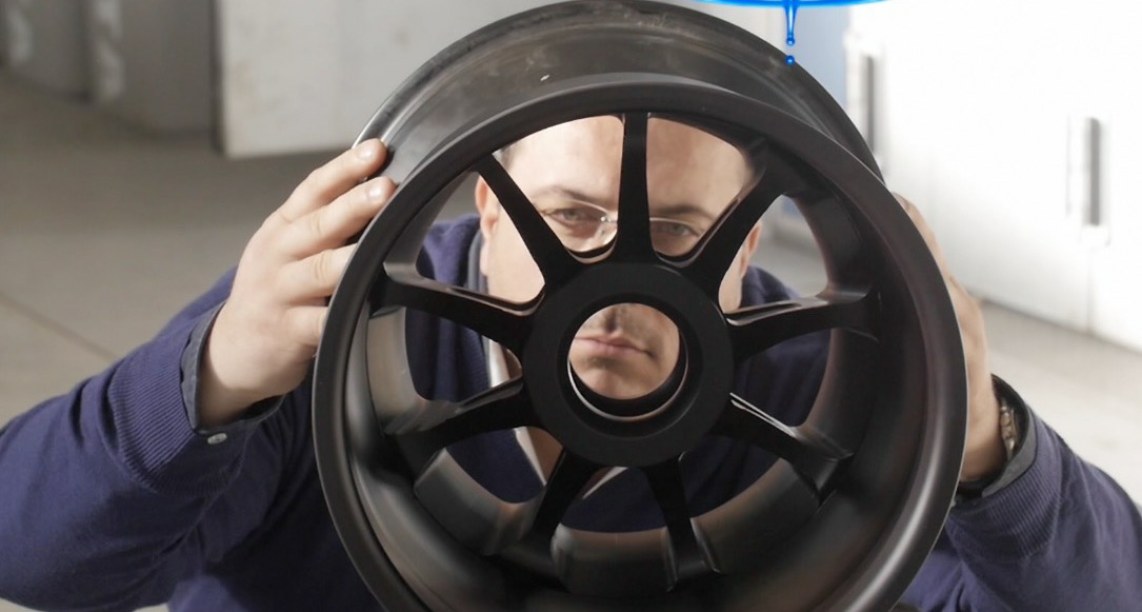
Last 17 April Emilia-Romagna launched the realization of a call financed with 4,2 million euro. The target? Encourage Emilian companies to create patents capable of contrasting and preventing the spread of Coronavirus. In the next issue of the biweekly magazine "Fifteen", out on Thursday 28 May, the economic section will deepen the projects admitted so far: thirty out of a total of 199 for a value of 3,1 million euro. An anticipation of Gianluca Falleti's project.
"From the approval of the application we have a time limit of six months for the realization of the project", Gianluca Falleti reasons, founder and owner of the Nanoprom company in Sassuolo. Falleti's proposal, who obtained the maximum share of the regional contribution, provides for the testing and production of removable antibacterial and antiviral films to be applied to surfaces to reduce the risk of contamination. "It is a type of paint that in contact with water– explains– causes it to behave like mercury, slips completely leaving the surface dry ». The Nanoprom patent has also been applied in Formula 1, aeronautics, submarines and satellites. The technology implemented by the Sassolese company focuses on the use ofPolysil, a particular coating, that once applied, guarantees the restoration of thegloss at values similar to those of the new surface, good corrosion resistance and high hardness. In addition, the surfaces become resistant to dirt, by reducing the surface tension. Polysil, also, it has the same qualities as glass. In this way the surfaces are ingelcoat, fiberglass, metal or other substrates can be recovered or preserved from wear, resistant and homologous to the material on which it rests.
«A dry surface– continues the Sassolese businessman– it is an environment devoid of life forms, where a virus is difficult to attack but, mostly, to survive without a natural habitat ». The price ratio? “The film would cost approx 4,50 euros per square meter. And one of our goals is to reach school environments ». Falleti explains, then, what are the three fundamental characteristics of Polysil, soon used also in the fight against Covid-19: «Reduction of frictions and progressive increase in the flowability of materials; ease in keeping the external and internal structures clean; greater savings in maintenance costs and consequent lower environmental impact, in the different environments where the materials are used, ie water and air ".
It is not the first time, however, that Falleti takes the field against Coronavirus. In April, with the same technology, had started to produce up to 150 thousand masks a day for the price of 61 cents. These were disposable protective devices made up of 55% from cellulose. The novelty of the masks produced by Nanoprom consists, still, not only in uv sanitization, but in the use of a water repellent able to guarantee greater protection. The masks, during thelockdown, they were distributed free of charge both to the Red Cross and to the civil protection between Castellarano, Sassuolo and Scandiano.
[Source: https://incronaca.unibo.it/ ]
Read MoreNanoprom donates 1000 masks at the Brescia District House Nerio Fischione
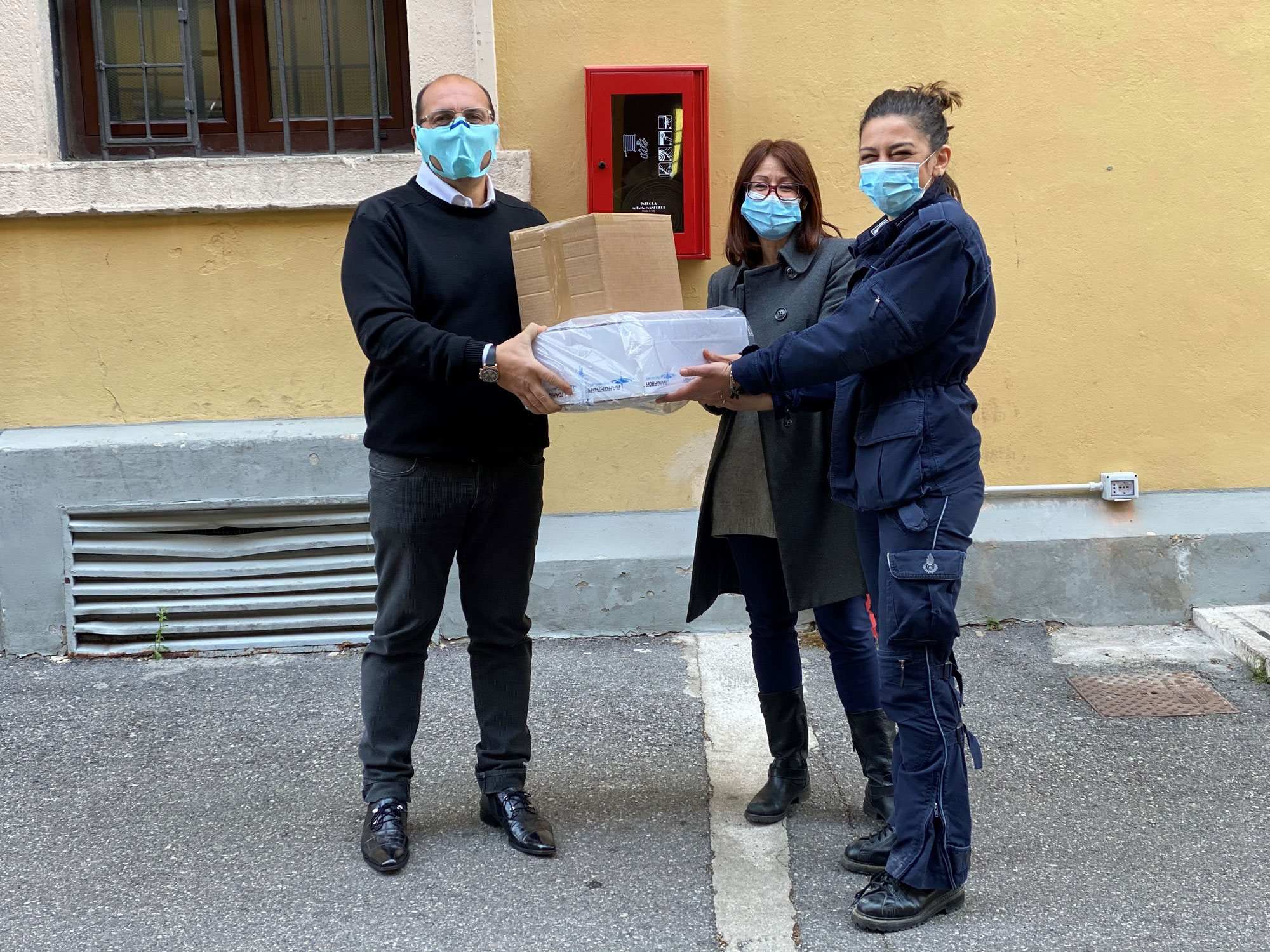
Yesterday the Nanoprom, always at the forefront of social issues in this difficult period, He donated 1000 masks at the Brescia District House Nerio Fischione.
#nanoprom #donation #pushyourlimits #masks #mascherinepertutti